The Importance of Food Safety in Plant-Based Production
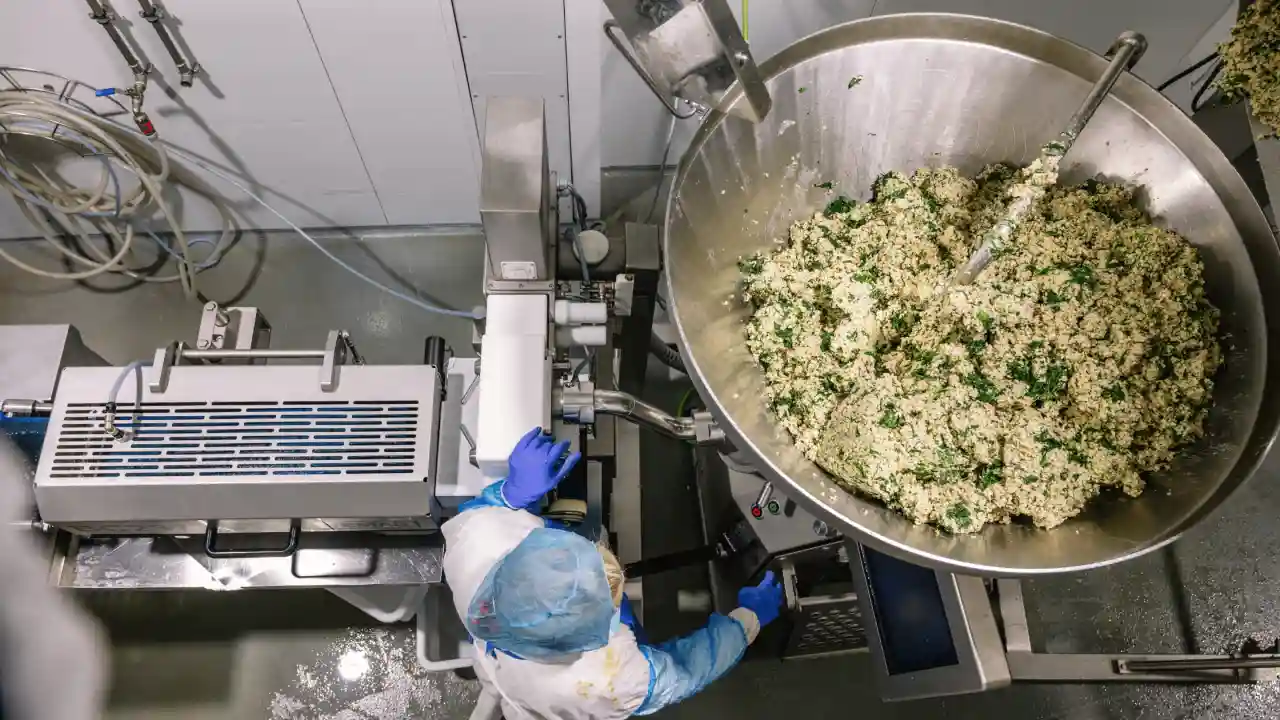
- Food safety must be integrated from the design stage of the plant-based product, not only checked at the end: raw materials, process, packaging, storage, and traceability must be defined from the outset.
- Controls depend on each product and process: microbiology, metals, moisture, temperature, heat treatment, shelf life, allergens, and finished product must be validated according to risk.
- Industrial validation and traceability are key to scale-up: they enable safe, repeatable, and controlled manufacturing, reducing incidents, waste, and supply risks.
Food safety in plant-based production is a fundamental aspect of ensuring that a product is safe, stable and suitable for commercialisation. In an industry that involves a wide variety of raw materials, formulations, manufacturing processes and product formats, each development requires specific controls tailored to its characteristics.
For manufacturers, food safety does not end when the product leaves the production line. It covers everything from the receipt and control of raw materials through to manufacturing, packaging, storage and the traceability of every batch. Together, these measures help reduce risks, maintain product stability and ensure a reliable supply chain.
Why Is Food Safety Critical in Plant-Based Production?
Plant-based products can involve very different raw materials and manufacturing processes, each with specific control requirements. For this reason, food safety should be considered from the product design stage and subsequently adapted to real manufacturing conditions.
Specific Risks in Plant-Based Ingredients and Products
Raw materials used in plant-based products can present different microbiological, physical and physicochemical characteristics. In addition, depending on the product, manufacturing may involve processes such as extrusion, thermal treatment, frying or chilled storage.
This means that the required controls are not exactly the same for every product. For example, in a plant-based texturate produced using dry extrusion, moisture levels may need to be controlled to ensure the product reaches the required level of dehydration. In products that undergo thermal processing, it is essential to verify that the target temperatures are achieved during manufacturing.
For this reason, food safety should be managed specifically for each product and process, with appropriate control measures established for every application.
Impact on Quality, Shelf Life and Supply Continuity
Food safety is closely linked to product stability and shelf life. Controls carried out during manufacturing and on finished products help verify that products meet defined requirements and maintain their characteristics throughout their intended shelf life.
A well-established control system also helps prevent incidents that could affect production, generate waste or compromise supply continuity. For products developed for third parties, consistency is particularly important. The product must be manufactured repeatedly while maintaining its specifications from batch to batch.
Critical Food Safety Control Points in Plant-Based Manufacturing
Food safety controls are defined according to the characteristics of each product and its manufacturing process. Common measures include microbiological testing, metal detection, in-process controls and finished product analysis.
Receipt and Control of Raw Materials
Food safety begins before raw materials enter production. Their receipt and inspection help confirm that they comply with established requirements and are suitable for manufacturing.
Supplier approval and evaluation also play a key role. Working with suppliers that meet predefined standards helps maintain consistent control over raw materials and reduces risks across the supply chain.
Processing, Mixing and Thermal Treatment
During manufacturing, controls tailored to each process are implemented. These may include parameters such as temperature, moisture and other variables relevant to the product.
Where thermal treatment is critical, manufacturers verify that the required conditions are achieved. For example, in the production of croquettes, controls may confirm that the product reaches the required core temperature during frying.
In dry extrusion processes, moisture monitoring helps ensure that the product is sufficiently dehydrated to meet its specifications.
These controls are not managed in isolation, but as part of a previously validated process monitored by the relevant teams.
Packaging, Sealing and Storage
Once the product has been manufactured, packaging and storage conditions become critical for maintaining safety and stability.
Depending on the product, different storage requirements and control measures may apply. These are complemented by finished product testing and shelf-life studies, which help assess how the product performs throughout its intended shelf life.
How to Ensure Food Safety in Custom Plant-Based Projects
When developing a product for a specific customer, food safety must be integrated from the earliest stages of the project. It is not simply about controlling the finished product, but about verifying that the proposed formulation and manufacturing process are suitable for industrial-scale production.
Designing Safe and Stable Formulations
Development begins with a formulation and manufacturing process designed around the characteristics of the final product. At this stage, the Quality team is also involved, reviewing and validating the procedures and controls before moving production to the factory floor.
This collaboration helps identify specific control requirements before manufacturing begins and ensures that suitable procedures are established for the product.
Industrial Validation Before Launch
Industrial validation is an important step in confirming that a product developed during earlier stages can be reproduced under real manufacturing conditions.
Before production begins, established procedures and controls are reviewed, and the corresponding checks are carried out during manufacturing. Finished product analysis and shelf-life studies, typically performed by external laboratories, complete the validation process.
The objective is to ensure that the product not only works at laboratory scale but can also be manufactured consistently and reliably under industrial conditions.
Adapting to the Customer, Distribution Channel and Final Format
Every product has different requirements depending on its formulation, format and storage conditions. As a result, food safety controls must be defined according to the specific characteristics of each project.
This is particularly important in bespoke developments, where raw materials, manufacturing processes, packaging formats and storage conditions may all vary.
Plant-Based Food Safety Regulations, Traceability and Control Systems
In addition to manufacturing controls, structured management and traceability systems help maintain control throughout the entire supply chain.
Traceability of Ingredients and Batches
Traceability makes it possible to follow a product from its raw materials through to delivery to the customer. It is considered a fundamental aspect of food safety because it enables the identification of the origin and movement of products across the supply chain.
At Sanygran, products can be traced from the delivery documentation of the raw materials used in production through to the customers who received the corresponding batch. This provides full visibility of each production run and supports rapid action should an issue arise.
Quality Controls and Document Verification
Food safety relies on both physical and analytical controls and the documented procedures that support them.
Microbiological testing, metal detection, in-process verification and finished product analysis all form part of this system. The specific controls required depend on the characteristics and risks associated with each product.
Allergen management also requires dedicated procedures. When a product containing an allergen is manufactured before a product that must be free from that allergen, a thorough cleaning process is carried out between productions. Verification activities, such as gluten testing at different points along the production line, help confirm the absence of the allergen.
Audits and Supplier Approval
Food safety also depends on maintaining controlled and verifiable procedures. Supplier approval programmes and audits form part of a system designed to evaluate and maintain standards throughout the supply chain.
In this context, manufacturing facilities certified under the IFS Food standard provide additional assurance for customers. IFS Food assesses products and production processes to verify a manufacturer’s ability to produce food that is safe, authentic and of consistent quality while meeting legal requirements and customer specifications.
At Sanygran, all production facilities are IFS-certified, helping support customer approval processes and third-party audits.
Plant-Based Food Safety, Scalability and Industrial Viability
Food safety is directly linked to the ability to manufacture a product consistently at industrial scale. A product that performs well during laboratory testing must also be capable of being reproduced under controlled industrial conditions.
Batch-to-Batch Consistency and Process Repeatability
Defining specific parameters and controls for each product helps reduce variability between batches and maintain the characteristics established during development.
This is one of the reasons why involvement from the Quality team throughout the project is important. Their participation helps ensure that procedures are reviewed before production begins and that they are correctly implemented during manufacturing.
Reducing Waste, Incidents and Returns
A well-defined control system helps identify deviations before they become product issues. This can contribute to reducing waste, rework and production incidents, ultimately improving manufacturing stability and efficiency.
For customers that require a reliable supply, the ability to manufacture safely and consistently is just as important as achieving the desired sensory characteristics.
What Does a Specialised Plant-Based Supplier Contribute?
Food safety should not be viewed as a control activity separate from product development. Instead, it should be considered an integrated part of the entire manufacturing process.
At Sanygran, controls are adapted to the characteristics of each product and process, covering raw materials, manufacturing parameters, finished products, shelf life, allergen management and traceability. The involvement of the Quality team from the early stages of development helps ensure that projects move to production with procedures that have already been reviewed and validated.
This is supported by the IFS certification of all production facilities and a traceability system capable of following each production run from the raw materials used through to the customers who receive it.
Because developing a plant-based product is not only about creating an effective formulation. It is also about being able to manufacture it safely, control it consistently and reproduce it reliably when production scales up.
Contact:
📞 +34 937 132 324
✉️ info@sanygran.com
Other articles you may be interested in:
- Plant-Based Food Development
- Plant-Based Solutions Provider
- Plant-Based Burger Supplier
- Wholesale Pea Starch Supplier
- Organic Tofu Supplier
- Organic Hummus Supplier
- Plant-Based Chicken Supplier
- Plant-Based Beef Supplier
- Plant-Based Seafood Alternatives Supplier
- Vegan Tuna Supplier
- Plant-Based Meat Analogues Supplier
- Pea Protein Concentrate Supplier
- Plant-Based Chunks Supplier
- Texturised Plant-Based Meat Supplier