The Importance of Validating Plant-Based Production
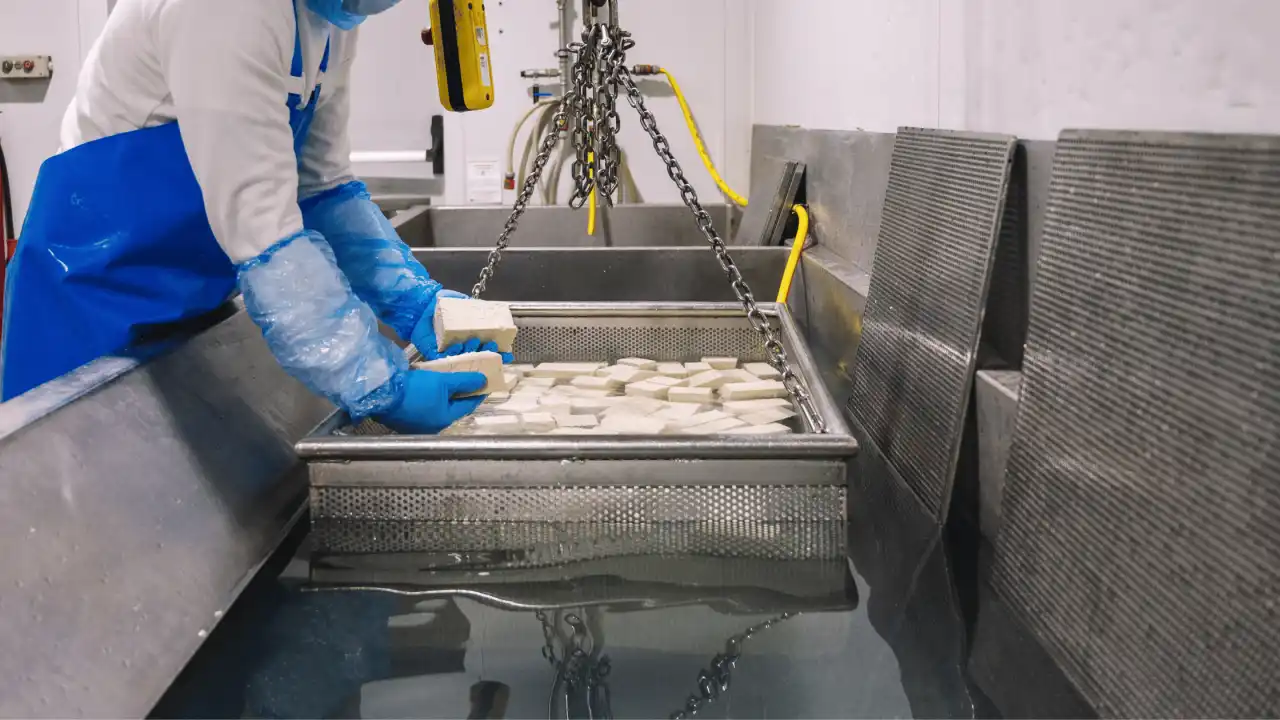
- Validating plant-based production means checking that formulation and process work together, not just that the prototype performs well in the laboratory.
- Validation reduces risks before industrialization: it helps detect issues in texture, flavor, stability, shelf life, food safety, waste, costs, and scalability.
- The process should move through stages: laboratory, pilot plant, and industrial batch, involving R&D, quality, production, and procurement to ensure repeatability.
The importance of validating plant-based production lies in ensuring that a formulation not only works in the laboratory, but can also be manufactured in a safe, stable and repeatable way at industrial scale.
When developing a new product, moving from a prototype to a production line introduces new variables, including equipment, processing times, raw materials, manufacturing conditions and packaging systems. What performs well in a controlled trial may not necessarily behave in exactly the same way when production is scaled up.
For this reason, validation acts as the bridge between development and manufacturing, making it possible to verify that the product maintains its intended characteristics in terms of texture, flavour, stability, yield and shelf life before moving towards stable industrial production.
What Does It Mean to Validate Plant-Based Production in an Industrial Environment?
Validating plant-based production means confirming that the formulation and the manufacturing process work together to consistently deliver the intended product under real production conditions.
The objective is not simply to create a sample that meets expectations. The real challenge is being able to reproduce that result batch after batch, within predefined specifications.
Validation of Formulation and Product Performance
Formulation validation allows manufacturers to assess how a product performs under the real conditions for which it has been designed.
Depending on the application, parameters that may be evaluated include:
- Texture and bite.
- Moisture content.
- Cohesion.
- Yield.
- Stability.
- Cooking performance.
- Sensory profile.
Evaluation does not necessarily end once manufacturing is complete. Depending on the product, additional testing may include cooking trials, regeneration tests, application trials and assessments under chilled or frozen storage conditions.
The goal is to confirm that the product not only achieves the desired characteristics immediately after production, but also performs as expected throughout its lifecycle.
Validation of the Manufacturing Process
A formulation may be correctly designed and still require adjustments when transferred to production.
Stages such as mixing, cooking, cooling, forming and packaging can all influence the final result.
For this reason, validation must confirm that the parameters established for each production stage consistently reproduce the desired product characteristics.
Why Validation Is Critical Before Industrialisation?
Validation helps reduce uncertainty before committing resources and production capacity at full scale.
The earlier a deviation is identified, the easier it is to determine its cause and implement corrective actions.
Reducing Technical and Food Safety Risks
Validation trials help identify potential product and process deviations before they affect routine manufacturing.
They can help detect:
- Stability issues.
- Deviations from specifications.
- Unexpected process behaviour.
- Storage-related issues.
Differences caused by changes in raw materials or manufacturing conditions.
Some issues only become apparent when products are exposed to real storage and distribution conditions. Changes in texture, flavour, appearance or stability may require modifications to the formulation or process before industrialisation can proceed.
Impact on Costs, Waste and Scalability
Insufficient validation can generate costs that were not anticipated during development.
Frequent process adjustments, production waste, out-of-specification batches and delayed product launches are just some of the challenges that can arise when a formulation has not been properly validated.
Scaling up should make it possible to move from laboratory testing to industrial production without losing the characteristics defined for the final product.
This is one of the biggest challenges in product development. A factory is not simply a larger laboratory. Equipment, batch sizes and process conditions are different, and it is essential to understand how the formulation performs under these new circumstances.
Technical Aspects That Should Be Validated in Plant-Based Products
Not all products require validation of exactly the same parameters. The validation plan should be adapted to the technology, formulation and intended application.
Texture, Flavour and Sensory Performance
Sensory characteristics play a major role in the acceptance of any food product.
For this reason, validation may include assessment of:
- Texture.
- Bite.
- Juiciness.
- Flavour intensity.
- Aftertaste.
- Appearance.
- Batch-to-batch consistency.
At Sanygran, sensory evaluations form part of the different stages of product development. Laboratory trials and industrial trials are assessed before samples are sent to customers, allowing potential adjustments to be identified in advance.
Sensory evaluation should also extend beyond the production day. Depending on the product and its intended shelf life, it is important to understand how these characteristics evolve during storage.
Stability, Preservation and Shelf Life
Validation must also determine whether a product maintains its characteristics throughout its intended shelf life.
This may include evaluation of:
- Quality evolution.
- Microbiological stability.
- Physical stability.
- Texture retention.
- Sensory profile evolution.
- Shelf life.
For chilled products, shelf life can become one of the most demanding aspects of development. It is not enough to achieve excellent texture and flavour on the day of manufacture. These characteristics must remain within defined specifications throughout the intended commercial life of the product.
Compatibility with Packaging and Distribution
Packaging and logistics conditions also contribute to overall product performance.
The selected packaging system must be compatible with the characteristics of the food and with the intended storage and distribution conditions.
For this reason, validation should consider the product exactly as it will reach the market, taking into account packaging format, storage conditions, transport and handling.
How Is Plant-Based Production Validated Step by Step?
Validation is generally carried out progressively, moving from controlled tests to conditions that increasingly resemble real manufacturing environments.
Laboratory Testing and Prototyping
The laboratory is the starting point for adjusting formulations and evaluating the first product versions.
During this phase, manufacturers may assess:
- Raw material functionality.
- Texture.
- Sensory profile.
- Stability.
- Formulation behaviour.
Laboratory trials help eliminate unsuitable options and optimise formulations before moving to a larger scale.
However, a formulation validated in the laboratory cannot yet be considered ready for industrial production.
Pilot or Pre-Industrial Trials
The next step is to reproduce manufacturing conditions in an environment that more closely resembles industrial production.
This stage makes it possible to assess how factors such as equipment, production volumes, processing times and operating conditions influence the product.
It is common for adjustments to emerge during this phase that were not evident during laboratory testing. Identifying them at this stage allows formulation or process modifications to be made before full-scale production.
Validation of Industrial Batches
Industrial trials allow manufacturers to evaluate product performance under the actual conditions in which it will be produced.
This stage typically assesses:
- Process repeatability.
- Compliance with specifications.
- Product consistency.
- Formulation performance at industrial scale.
- Sensory results.
Once this phase has been successfully completed, manufacturers have a much stronger basis for defining production conditions and moving towards stable manufacturing.
Which Departments Should Be Involved in Validation?
Validation is not the responsibility of a single department. Successful industrialisation requires input from multiple areas of the business.
R&D, Quality and Production
Each department plays a different role within the validation process:
- R&D works on formulation and product performance.
- Quality verifies compliance with specifications and requirements.
- Production evaluates process feasibility and repeatability within the factory.
Collaboration between these areas helps identify deviations earlier and supports better decision-making through a broader understanding of the product.
In certain projects, other departments such as marketing and sales may also participate, particularly when the product needs to be assessed against project objectives or customer expectations.
Purchasing and Product Development
Raw materials and their availability can also influence industrialisation.
For this reason, development teams should consider:
- Availability of raw materials.
- Technical specifications.
- Cost.
- Supply consistency.
- Alternative sourcing options.
A technically viable formulation must also be realistic from both a production and supply perspective.
Common Mistakes When Validation Is Not Performed Properly
Failing to adequately validate a formulation can allow relatively small issues to become major problems once the product reaches production or the market.
Scaling Up Without Reproducibility
One of the most common mistakes is assuming that a formulation that performs well in the laboratory will behave exactly the same way in production.
As scale increases, differences related to:
- Equipment.
- Batch volumes.
- Processing times.
- Raw materials.
- Manufacturing parameters.
- can begin to appear.
If these variables have not been properly evaluated, maintaining consistent production and controlling deviations becomes significantly more challenging.
Failing to Adapt the Product to the Sales Channel
A product should be validated according to how it will ultimately be used and marketed.
Storage conditions, distribution requirements, preparation methods and consumption patterns can vary depending on the application and sales channel.
For example, a chilled retail product must maintain its characteristics throughout its intended shelf life and withstand normal distribution and storage conditions.
For this reason, validating a product also means validating the environment in which it will exist.
How Does Sanygran Add Value to This Validation Process?
Validation becomes more effective when approached from a broader perspective that includes the product, the process and the final application.
Tailor-Made Development Based on Customer Specifications
At Sanygran, we work with a range of plant-based ingredients and solutions, adapting developments to the requirements of each project.
Depending on the application, variables that may be adjusted include:
- Formulation.
- Texture.
- Format.
- Flavour intensity.
- Structure.
- Manufacturing technology.
Before samples are sent to customers, internal testing is carried out to verify that results meet the defined objectives.
Sensory evaluations help assess characteristics such as texture, bite, flavour intensity and aftertaste, both during laboratory trials and after industrial validation.
Support Throughout Testing, Optimisation and Scale-Up
The transition from laboratory development to production is not always straightforward. During testing, small deviations may appear that require changes to raw materials, formulation adjustments or modifications to processing parameters.
Having a team capable of assessing these variables together helps facilitate decision-making and supports the move towards more stable manufacturing.
Ultimately, validating plant-based production is not simply about proving that a product works once. It is about demonstrating that it can be manufactured safely and consistently while maintaining the characteristics defined for the product over time and at industrial scale.
Contact:
📞 +34 937 132 324
✉️ info@sanygran.com
Other articles you may be interested in:
- Plant-Based Food Development
- Plant-Based Solutions Provider
- Plant-Based Burger Supplier
- Wholesale Pea Starch Supplier
- Organic Tofu Supplier
- Organic Hummus Supplier
- Plant-Based Chicken Supplier
- Plant-Based Beef Supplier
- Plant-Based Seafood Alternatives Supplier
- Vegan Tuna Supplier
- Plant-Based Meat Analogues Supplier
- Pea Protein Concentrate Supplier
- Plant-Based Chunks Supplier
- Texturised Plant-Based Meat Supplier