Traceability in Plant-Based Products
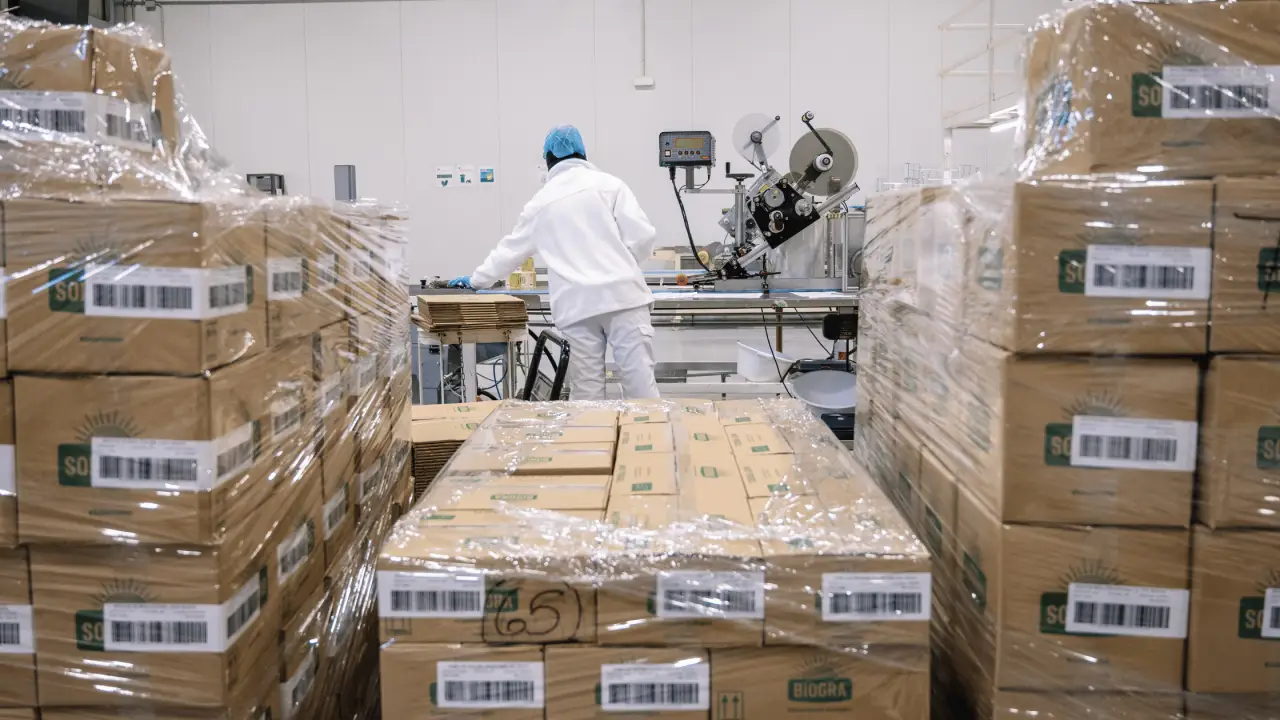
- Traceability in plant-based products makes it possible to control raw materials, processes, and finished products, from ingredient receipt through to final customer delivery.
- A robust system requires recording batches, formulations, production orders, quality controls, and dispatches, making audits, complaints, and incident management easier.
- Traceability impacts safety, quality, and scalability: it helps manage allergens, recalls, batch-to-batch consistency, shelf life, and industrial growth without losing control.
In this article, we explore traceability in plant-based products, a key element in ensuring control over raw materials, manufacturing processes and finished products throughout the production of plant-based foods.
Traceability enables manufacturers to track the complete journey of a product, from ingredient intake to delivery to the end customer. In the plant-based sector, where multiple raw materials, suppliers and formulation variations are involved, having a robust traceability system simplifies quality control, improves responsiveness to issues and provides greater security throughout the production process.
Furthermore, for manufacturers supplying retailers, private label brands and foodservice operators, traceability has become an essential requirement for guaranteeing supply reliability, meeting quality standards and responding quickly to audits or incidents.
What Does Traceability Require in the Plant-Based Supply Chain?
Traceability requires manufacturers to identify which raw materials are included in each batch, how they have been used during production and to which customers the final products have been supplied.
To achieve this, it is necessary to maintain organised records covering ingredients, batches, manufacturing processes, formulations and product dispatches. It is not simply about regulatory compliance; it is about having reliable information available to make rapid decisions when issues or customer complaints arise. Well-managed traceability also supports continuous improvement, enabling manufacturers to identify deviations, analyse trends and optimise both production processes and product quality.
Critical Traceability Points for Ingredients and Finished Products
Traceability must be maintained from the receipt of raw materials right through to finished product dispatch. The most sensitive stages are typically:
- Ingredient intake
- Formulation
- Manufacturing
- Packaging
- Storage
- Distribution
Any loss of information at these stages can make it difficult to reconstruct the complete history of a production batch. Information commonly recorded includes:
- Raw material batch numbers
- Production orders
- Quality control checks
- Production dates
- Finished product destinations
This makes it possible to rapidly reconstruct the complete journey of any product reference whenever required.
Internal Traceability vs Customer Traceability
Internal traceability allows manufacturers to monitor the movement of raw materials within the production facility and understand how they are transformed into finished products.
Customer traceability, on the other hand, identifies which batches have been supplied to each manufacturer, distributor or retail chain.
These two levels are complementary. While internal traceability supports production process control, customer traceability enables the rapid localisation of specific batches in the event of an issue, minimising the impact on wider production.
How Is Traceability Applied in Plant-Based Manufacturing?
Traceability should be embedded within day-to-day operations and maintained throughout every stage of production.
In plant-based food manufacturing, where it is common to work with different plant proteins, fibres, starches, functional ingredients and frequent formulation adjustments, precise monitoring is essential to ensure product consistency and repeatability.
Raw Material Intake and Supplier Control
Every traceability process begins with ingredient receipt. Each raw material should be correctly identified and linked to the relevant documentation, including:
- Supplier details
- Original batch number
- Date of receipt
- Technical specifications
- Applicable certificates
Whenever a new supplier is introduced or a specification changes, the raw material must also be validated and documentation updated to maintain the integrity of the traceability system.
Monitoring During Formulation and Production
Traceability does not end once ingredients enter the factory. Throughout production it is equally important to record information relating to:
- Recipes used
- Formulation versions
- Manufacturing orders
- Process parameters
- Quality control activities
In plant-based products, even minor adjustments can influence texture, stability or industrial performance. Maintaining a detailed production history makes it easier to investigate deviations and consistently reproduce manufacturing conditions.
Batch Identification During Packaging and Dispatch
The final stage involves correctly identifying the finished product. Effective coding systems enable every unit to be linked to:
- Raw materials used
- Manufacturing date
- Production line
- Packaging format
- Destination customer
This information is essential for warehouse management, logistics efficiency and rapid intervention whenever a specific batch must be blocked, isolated or recalled.
Traceability, Food Safety and Risk Management
Traceability is directly linked to food safety and a company’s ability to manage risk effectively.
A comprehensive traceability system has limited value if information cannot be retrieved quickly when an issue occurs. The ability to rapidly identify a batch, determine which raw materials were used and establish which customers received the product can make the difference between a minor corrective action and a major operational problem.
Allergen Control and Cross-Contamination Prevention
Many plant-based products contain potentially allergenic ingredients such as soya or gluten. For this reason, it is essential to maintain records relating to:
- Batches used
- Production sequences
- Cleaning procedures
- Verification activities
These controls help prevent cross-contamination, support internal investigations and strengthen audit readiness.
Product Recall and Reverse Traceability
Reverse traceability enables manufacturers to determine precisely which raw materials were used in any particular batch and where that product has been distributed. This makes it possible to identify:
- Affected product references
- Customers who received the products
Products requiring withdrawal or market recal
The faster and more accurately this process can be completed, the lower the financial, operational and commercial impact on the manufacturer.
Traceability Requirements by Sales Channel
Not all customers require the same level of information. Traceability in plant-based products must be adapted to the sales channel, product category and documentation requirements of each project.
Requirements for Prepared Meal Manufacturers
Companies incorporating plant-based ingredients or products into their own recipes require reliable information regarding:
- Batch identification
- Product specifications
- Shelf life
- Product stability
- Processing performance
A well-structured traceability system simplifies ingredient integration, reduces uncertainties during product development and provides greater confidence when formulations are modified or scaled up.
Expectations of Food Manufacturers and Distributors
Manufacturers and distributors often require a high degree of documentation and process control to guarantee supply continuity.
In addition to technical specifications, they frequently request information on:
- Batch history
- Formulation changes
- Certifications
- Audit results
- Incident management procedures
Having this information available and organised strengthens supplier-customer relationships and supports successful audits and supplier approvals.
Traceability for Retail and Private Label Products
Projects supplying retailers and private label brands generally require particularly robust traceability systems.
Accurate batch identification, shelf-life control, supporting documentation and the ability to quickly locate individual product references provide reassurance for both manufacturers and distribution partners. In these projects, traceability forms a fundamental requirement for maintaining a stable and consistent supply.
Technologies and Systems That Improve Traceability in the Plant-Based Industry
Digitalisation has transformed traceability management in plant-based food manufacturing.
Today, many businesses operate with integrated ERP systems, data capture solutions and document control platforms that enable real-time information recording while reducing errors associated with manual processes.
The goal extends beyond storing information; it is ensuring that information can be recovered quickly whenever it is needed.
Coding, Labelling and Data Capture
Correct identification through batch coding and labelling systems enables products to be tracked from raw material intake through to dispatch. This helps organisations to:
- Quickly identify any batch
- Accelerate audits
- Reduce identification errors
- Improve logistics management
A clear coding system also simplifies communication between production, quality, warehouse and customer teams.
Digital Records and Document Control
Digital management systems make it possible to centralise all manufacturing-related information. This allows rapid access to:
- Formulation changes
- Supplier history
- Technical specifications
- Production records
- Quality control documentation
A complete traceability system is only effective if information can be retrieved quickly when incidents occur. Accessible records improve decision-making and reduce response times when problems arise.
How Does Traceability Impact Product Quality, Shelf Life and Scalability?
Traceability is not simply a documentation requirement. It also contributes directly to product quality, process repeatability and industrial scalability.
When information is correctly recorded throughout production, manufacturers can more easily identify deviations, implement corrective actions and maintain product consistency.
Organoleptic Consistency Between Batches
Accurate recording of ingredients, formulation versions and manufacturing conditions helps maintain greater consistency in:
- Texture
- Flavour
- Appearance
- Cooking performance
If a deviation occurs, traceability enables its origin to be identified quickly and corrective measures implemented before future production runs are affected.
Shelf Life and Supply Chain Stability
The stability of a plant-based product depends on numerous factors that must remain under control throughout the supply chain.
Traceability links each production batch to manufacturing, storage and transport conditions, supporting the investigation of issues related to shelf life, cold chain integrity and product performance during distribution.
Industrial Scale-Up Without Losing Batch Control
As production volumes increase, process complexity grows accordingly.
A robust traceability system enables manufacturers to manage multiple product references, suppliers and production orders without losing visibility over individual batches.
This supports industrial growth while maintaining repeatability, quality control and supply reliability. In addition, historical records provide valuable information for continuous improvement, trend analysis and long-term manufacturing process optimisation.
What Should an Industrial Customer Expect from a Plant Based Supplier Regarding Traceability?
When selecting a plant-based manufacturing partner, traceability should be considered a key evaluation criterion from the outset.
It is not simply about receiving documentation; it is about working with a supplier capable of providing reliable information, responding rapidly to incidents and maintaining product consistency between batches.
Technical Documentation and Product Specifications
Among the most valuable documents are:
- Up-to-date technical data sheets
- Batch identification records
- Storage conditions
- Shelf-life information
- Product specifications
- Audit and traceability documentation
At Sanygran, we develop plant-based food manufacturing projects supported by traceability systems that allow complete product monitoring, from raw material intake through to final dispatch.
Working with a partner that integrates traceability throughout the entire manufacturing process enables companies to respond efficiently to audits, maintain documentary control and provide greater assurance when products are destined for retail, private label or highly demanding distribution channels.
Because effective traceability is not simply about recording information — it is about having access to that information when it truly matters, enabling informed decisions, rapid issue resolution and uninterrupted supply continuity.
Contact:
📞 +34 937 132 324
✉️ info@sanygran.com
Other articles you may be interested in:
- Plant-Based Food Development
- Plant-Based Solutions Provider
- Plant-Based Burger Supplier
- Wholesale Pea Starch Supplier
- Organic Tofu Supplier
- Organic Hummus Supplier
- Plant-Based Chicken Supplier
- Plant-Based Beef Supplier
- Plant-Based Seafood Alternatives Supplier
- Vegan Tuna Supplier
- Plant-Based Meat Analogues Supplier
- Pea Protein Concentrate Supplier
- Plant-Based Chunks Supplier
- Texturised Plant-Based Meat Supplier