High-Moisture Plant-Based Texturates
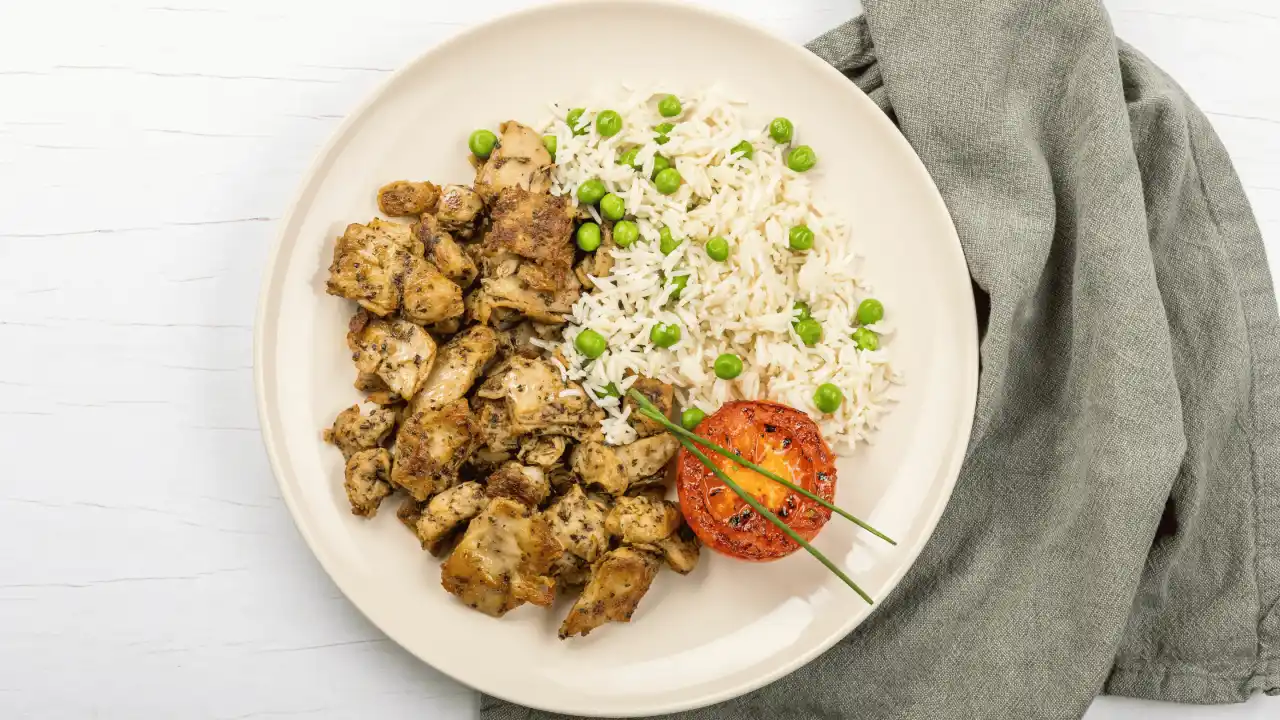
- High-moisture plant-based texturates make it possible to create fibrous, juicy, and stable structures, closer to a meat-like experience than traditional TVP.
- They add value in prepared meals, fillings, foodservice, retail, and private label, maintaining integrity during cooking, regeneration, chilling, and freezing.
- Selection must be validated according to texture, shelf life, and the customer’s process: moisture, formulation, storage, cooking, syneresis, and batch-to-batch scale-up are critical.
Achieving a convincing plant-based texture is no longer solely a matter of formulation. High-moisture plant-based texturates have become one of the most promising technologies for developing plant-based alternatives with a fibrous structure, juicy bite and stable performance throughout the manufacturing process.
Thanks to high-moisture extrusion, it is now possible to create products capable of replicating the eating experience of meat while adapting to applications as diverse as ready meals, foodservice solutions, and products intended for retail and private label markets.
In this article, you will discover what high-moisture texturates are, how they are manufactured, the benefits they bring to the food industry, and why more and more manufacturers are incorporating them into new product developments.
What Are High-Moisture Plant-Based Texturates?
High-moisture plant-based texturates are products made from plant proteins that, through a high-moisture extrusion process, develop a fibrous structure very similar to that of meat.
Put simply, these are plant proteins that move beyond the form of powders or granules and become structured pieces with a defined texture, a juicy bite and suitability for a wide range of food applications.
The main difference compared with a traditional textured vegetable protein (TVP) is that the product leaves the process with a high moisture content, making it possible to achieve a more fibrous texture, a more realistic bite and greater juiciness.
For food manufacturers, this represents a significant advantage, as it facilitates the development of plant-based products ready to be incorporated into recipes, reducing processing stages and improving consistency in the final result.
In addition, these texturates can be used in both chilled and frozen products, adapting to different preservation, distribution and shelf-life requirements.
Industrial Applications of High-Moisture Texturates
The principal advantage of this technology is its versatility.
Depending on the formulation, cut and flavour profile, the same process can deliver completely different applications.
Chilled and Frozen Ready Meals
Ready meals are one of the categories where these products provide the greatest value.
Their structure remains intact throughout cooking, regeneration, chilling and freezing processes, enabling manufacturers to develop recipes that remain consistent right up to the point of consumption.
For this reason, they are particularly attractive for producers of ready meals, premium convenience foods and ready-to-eat solutions.
Fillings, Sauces and Mixed Preparations
They also perform exceptionally well in applications where they are combined with other ingredients.
Plant-based Bolognese sauces, pasta fillings, pizzas, wraps, tacos, prepared rice dishes and sauces are just some examples where texturates provide structure while maintaining stability throughout the product’s shelf life.
Their ability to absorb flavours makes them easy to incorporate into complex recipes while retaining a distinct texture.
Products for Retail and Private Label
In products intended for large-scale retail distribution, consistency is just as important as the recipe itself.
High-moisture texturates make it possible to achieve uniform products from batch to batch, with excellent appearance and stable performance during chilled or frozen storage.
This facilitates the launch of new retail and private-label products, where product consistency is a key requirement.
How Are High-Moisture Texturates Produced and Processed Industrially?
Final product quality does not depend solely on machinery.
The selection of raw materials, formulation design and control of the entire production process determine the texture, juiciness and subsequent performance of the product.
Raw Materials and Formulation
The plant proteins selected play a major role in determining the final result.
At Sanygran, we primarily work with soy and pea proteins, two raw materials that offer excellent functional properties for these applications.
In addition, our R&D team has developed projects using ingredients such as brewers’ spent grain, which contributes to circular economy initiatives and has been used in products such as our plant-based beef alternative, as well as oats, which provide a softer bite and a particularly pleasant texture.
Each raw material behaves differently during extrusion, making the right combination essential to achieving the desired product performance.
Texturisation and Moisture Control
During extrusion, controlling moisture is one of the most critical aspects of the process.
Variables such as water content, temperature and processing speed directly influence the formation of plant-based fibres.
Precise control allows manufacturers to obtain highly juicy products with a uniform texture and excellent storage stability.
By adjusting these parameters, it is also possible to develop products with either a denser or a lighter structure, depending on the requirements of the final application.
Cooling and Conditioning
Once the desired structure has been achieved, an equally important phase begins.
Cooling helps to stabilise the internal structure and preserve the texture obtained during extrusion.
The product is then conditioned according to the target application and required final format.
At Sanygran, we commonly work with formats such as chunks, pulled-style strands and flakes, among others.
This variety enables each customer to find the most suitable solution for their recipe without modifying their manufacturing process.
Functional Benefits of High-Moisture Plant-Based Texturates for Food Manufacturers
High-moisture texturates do more than replace animal-derived ingredients. They can also help optimise processes, improve product stability and reduce development times.
Texture and Eating Experience
One of the main challenges in any meat analogue is delivering a convincing eating experience.
Thanks to high-moisture extrusion, it is possible to achieve different levels of fibrousness, juiciness, firmness and bite, tailoring the product to the outcome each customer is seeking.
Developing strips for fajitas requires a different texture from that needed for a plant-based lasagne filling or chunks designed to accompany a rice dish. Each application demands a specific texture and therefore a dedicated manufacturing approach.
In addition to texture, the sensory profile can also be customised. At Sanygran, we develop different flavour profiles, including chicken, beef and seafood-inspired concepts such as plant-based tuna or salmon, enabling each development to align with the brand’s positioning.
Formulation Efficiency and Manufacturing Performance
One of the less visible but most important advantages for manufacturers is process efficiency.
As ready-to-use ingredients, these products can simplify certain production stages and contribute to greater consistency between batches.
This translates into:
- More efficient processes.
- Reduced preparation time.
- Greater manufacturing repeatability.
- Improved utilisation of raw materials.
For manufacturers producing high volumes, these improvements can have a direct impact on productivity and product consistency.
Versatility Across Recipes and Formats
A single technology can be used to develop a wide variety of solutions.
Depending on the application, texturates can be used:
- As a plant-based alternative to meat or fish, ready for incorporation into recipes.
- As a base ingredient for developing higher-value plant-based products such as burgers, nuggets, meatballs and various finger food concepts.
This versatility enables manufacturers to address different market needs and develop multiple applications from a single technology platform.
Technical Criteria for Selecting a High-Moisture Texturate
Not every project requires the same type of texturate.
Before selecting a solution, it is important to analyse how the product will perform throughout its entire lifecycle.
Texture Profile and Cooking Performance
Initial texture is important, but maintaining it after cooking is even more critical.
For this reason, product performance should be validated during processes such as:
- Cooking
- Regeneration
- Reheating
- Freezing and thawing
The objective is to ensure that the texture remains stable from production through to the moment of consumption.
Shelf Life, Preservation and Microbiological Stability
When working with high-moisture products, preservation becomes a critical factor.
Formulation, packaging systems and storage conditions all directly influence shelf life.
For this reason, each development should be validated under real manufacturing and distribution conditions to ensure stability throughout the commercial lifecycle.
Compatibility with the Customer’s Production Process
Developing a good product is only part of the challenge. It must also integrate easily into the customer’s manufacturing process.
Factors such as mixing, dosing, filling and packaging can influence overall performance.
For this reason, during development it is important to adapt the behaviour of the texturate to the customer’s real manufacturing requirements and not solely to its organoleptic properties.
Challenges in Manufacturing High-Moisture Plant-Based Texturates and How to Overcome Them
High-moisture extrusion offers significant opportunities, but it also presents technical challenges that must be controlled from the outset.
Moisture Management and Syneresis Prevention
One of the main challenges is maintaining the correct balance between juiciness and stability.
Excess water or insufficient process control can lead to liquid release during storage or changes in texture.
This is why both formulation and extrusion parameters must be carefully optimised, alongside appropriate preservation conditions.
Batch Consistency and Industrial Scale-Up
Achieving good results at pilot scale is only the first step.
The real challenge lies in reproducing exactly the same texture when producing thousands of kilograms at industrial scale.
To achieve this, it is necessary to maintain strict control over raw materials, moisture, temperature and extrusion parameters, ensuring maximum batch-to-batch repeatability.
This consistency is particularly important for retail and private-label products, where consumers expect the same product every time they purchase it.
Tailoring Solutions to Each Project
Every customer has different requirements.
Some are looking for a highly fibrous texture for a chicken alternative, while others require a softer structure for ready meals or seafood-inspired solutions.
For this reason, at Sanygran, development begins by understanding the final application and adapting both the formulation and the process to achieve exactly the performance required for each project.
What Should a B2B Supplier of High-Moisture Plant-Based Texturates Offer?
Choosing a supplier is not simply a matter of comparing technical specifications.
It also means working with a team capable of supporting product development from the earliest trials through to full-scale production.
Joint Development and Specification Optimisation
Every project starts with different requirements.
That is why we work closely with customers to define aspects such as:
- Texture
- Format
- Flavour profile
- Shelf life
- Preservation system
This collaborative approach helps reduce development times and minimise adjustments once production begins.
Technical Support During Industrial Implementation
Introducing a new ingredient into a manufacturing process requires validation and adjustments to ensure optimal performance at industrial scale.
During this phase, factors such as texture, moisture, dosing and integration into the production line may need to be addressed.
Having specialised technical support facilitates implementation, reduces adaptation time and helps minimise risks before commercial launch.
A Partner for Developing High-Moisture Plant-Based Solutions
At Sanygran, we develop and manufacture high-moisture plant-based texturates tailored to the requirements of each project.
We collaborate with food manufacturers, private-label brands and the wider food industry to create customised solutions in terms of format, texture and sensory profile.
We support our customers from product development through to industrial implementation, helping bring new products to market efficiently and successfully.
Contact:
📞 +34 937 132 324
✉️ info@sanygran.com
Other articles you may be interested in:
- Plant-Based Food Development
- Plant-Based Solutions Provider
- Plant-Based Burger Supplier
- Wholesale Pea Starch Supplier
- Organic Tofu Supplier
- Organic Hummus Supplier
- Plant-Based Chicken Supplier
- Plant-Based Beef Supplier
- Plant-Based Seafood Alternatives Supplier
- Vegan Tuna Supplier
- Plant-Based Meat Analogues Supplier
- Pea Protein Concentrate Supplier
- Plant-Based Chunks Supplier
- Texturised Plant-Based Meat Supplier