Dry Plant-Based Texturates
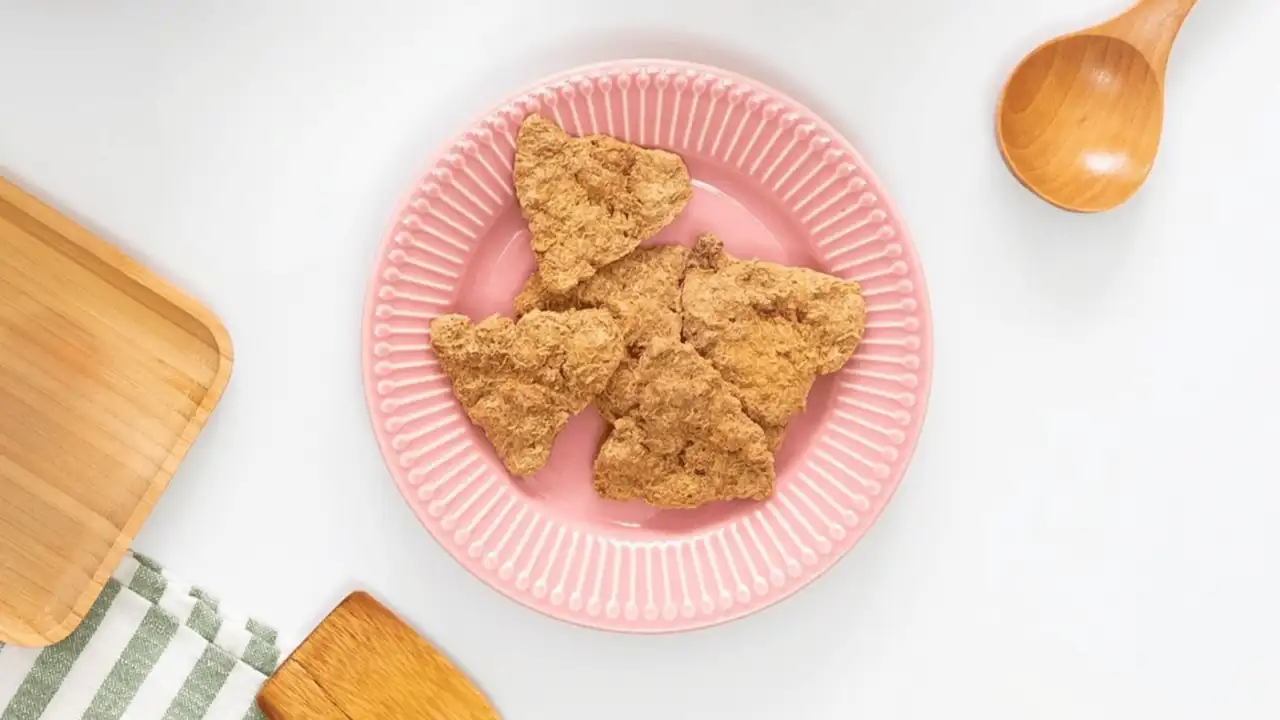
- Dry plant-based texturates provide structure, texture, and industrial functionality, enabling the development of burgers, nuggets, fillings, sauces, and prepared meals with greater formulation flexibility.
- Texturate selection depends on the raw material, format, and final application, considering factors such as hydration, texture, flavour, yield, cost, and processing performance.
- An industrial texturate must deliver stability, scalability, and batch-to-batch consistency, from extrusion and manufacturing through to integration into production lines and the final product.
Dry plant-based texturates, commonly known as Textured Vegetable Protein (TVP), are a versatile solution for developing plant-based foods with a defined structure, reliable performance after hydration, and easy storage and transportation. Their use extends far beyond meat alternatives, as they can be incorporated into burgers, fillings, Bolognese sauces, nuggets and ready meals.
In this article, we explain what they contribute to industrial formulations, the raw materials and formats available, how they are manufactured, and the key criteria to consider when selecting a texturate for a specific application.
What are dry plant-based texturates and what role do they play in formulation?
Textured vegetable protein (TVP) are ingredients made from plant-based raw materials that, through an extrusion process, develop a structure that enables them to absorb water and create a specific texture during hydration.
For food manufacturers, their value goes beyond protein content alone. Texturates can provide structure, bite, volume and formulation integration, while also making it easier to store and handle the ingredient before it is incorporated into the final product.
Their dry format also allows manufacturers to work with a stable, easy-to-dose ingredient that can be incorporated into recipes according to the specific requirements of the finished product.
The difference between dry texturates and other plant-based matrices
Not all plant-based solutions meet the same industrial requirements.
A textured vegetable protein can be particularly interesting when manufacturers need an ingredient that can be stored, transported and dosed before being incorporated into a formulation. Compared with pre-hydrated plant-based matrices or finished products, the dry format offers greater flexibility in deciding when and how the ingredient is added to the recipe.
It also allows both the raw material and physical format to be tailored to the final product. A fine granule may integrate easily into certain mixes or fillings, while a larger piece may be preferred when a more defined presence is required within the finished preparation.
In industrial applications, this has a practical implication: the choice of texturate should be based on the final product and manufacturing process, not solely on the ingredient itself.
Technological functions in finished products
Texturates can fulfil a variety of functions within a formulation:
- Providing bite and structure to plant-based products.
- Integrating into blends for burgers, nuggets and fillings.
- Contributing to texture in sauces and ready meals.
- Absorbing water and flavours during hydration.
- Maintaining appropriate structure throughout subsequent cooking or reheating processes, depending on the formulation.
This is why two products made with the same protein source can deliver very different results. The format, degree of texturisation and method of incorporation all have a direct impact on the final outcome.
Main formats and raw materials used in dry plant-based texturates
The raw material determines much of a texturate’s behaviour, but so does its physical structure.
When developing an industrial solution, both variables should be considered together: which ingredient is used and what texture is required.
At Sanygran, we primarily work with texturates made from soya, pea and blended plant-based ingredients, such as Legumeat®, a combination of soya flour, bean flour and rice flour.
The most common plant proteins in dry texturates
Soya remains one of the most widely used raw materials in plant-based texturates and enables the development of solutions suitable for a wide range of applications.
Pea protein has become one of the fastest-growing raw materials within the plant-based sector. In addition to offering strong technological performance, it allows manufacturers to develop formulations that avoid some of the industry’s most common allergens, such as soya and gluten.
There are also solutions based on blends of plant-based raw materials. This is the case with Legumeat®, Sanygran’s proprietary development, which combines soya flour, bean flour and rice flour to create a plant-based matrix that differs from texturates made from a single protein source.
The choice should not be based solely on the origin of the protein. It is equally important to consider texture, flavour, colour, hydration behaviour and end-use application.
Granulated, chunk and flake formats
The physical format influences how a texturate is incorporated into a recipe.
At Sanygran, we offer soya and pea texturates in fine granulated formats, particularly suited to formulations requiring homogeneous integration.
In the case of Legumeat®, in addition to fine granules, we also offer larger formats such as chunks and fillets for applications where a more defined plant-based structure is required.
Format selection depends on factors including:
- The type of final product.
- The desired level of integration.
- The target texture.
- The hydration process.
- The mixing system.
- The intended cooking or reheating method.
As a result, the same concept of a dry texturate can lead to very different solutions depending on the application.
How are dry plant-based texturates manufactured?
The production of a textured vegetable protein begins long before the ingredient reaches the customer’s production line.
Extrusion transforms plant-based raw materials into structures with specific physical characteristics. During the process, operating conditions within the extruder influence how this structure develops and, consequently, how the product performs afterwards.
The objective is not simply to create a plant protein with a specific shape, but to obtain a texturate that is stable, reproducible and suitable for subsequent hydration and industrial use.
Extrusion, drying and product stabilisation
Extrusion combines different processing conditions to transform raw materials and develop the texturate’s structure.
The product is then dried to achieve the conditions required for storage and handling.
This stage is particularly important because the end result must be consistent not only visually but also in its subsequent performance. When a customer incorporates a texturate into an industrial formulation, they need the ingredient to respond predictably from batch to batch.
In other words, the quality of a textured vegetable protein is measured not only when it leaves the extruder, but also by how it performs once rehydrated and incorporated into a formulation.
Process variables affecting texture and performance
Final texture depends on several extrusion process variables and the characteristics of the raw material itself.
These include factors such as:
- Temperature, which influences raw material transformation.
- Moisture, which affects structure development during extrusion.
- Pressure and extrusion conditions, which determine the texture achieved.
- Product size and shape, partly defined by the die system.
- Final drying level, which is essential for product stability.
There is no universal combination that works for all applications. A texturate intended for a Bolognese sauce will not necessarily require the same characteristics as one designed for larger meat-free pieces.
For this reason, process control is just as important as raw material selection.
Criteria for selecting a dry texturate for plant-based applications
Selecting a texturate should not be reduced to comparing ingredients or prices per kilogram.
For R&D and purchasing teams, it is far more relevant to evaluate the performance the ingredient delivers within the intended application.
A texturate may be technically sound yet still not represent the best solution if it fails to suit the process, format or sensory objectives of the final product.
Compatibility with ready meals, fillings and meat alternatives
Dry texturates can be incorporated into a wide range of applications.
In burgers and nuggets, they can help create an integrated structure within the product matrix.
In fillings and Bolognese sauces, a granulated format can provide structure and recognisable texture without dominating the overall recipe.
In ready meals, selection must also take into account what happens after production, including cooking, reheating, storage and consumption.
For this reason, Sanygran works with different formats and raw materials suited to applications ranging from formed products to more complex prepared foods.
Selection factors: hydration, flavour, texture and cost
One advantage of dry texturates is that they can be designed around their behaviour during hydration.
At Sanygran, our texturates are manufactured in a neutral format, enabling them to absorb the flavour profile required by each formulation.
This is particularly valuable for manufacturers developing products with different sensory profiles. The same structural base can be used across multiple recipes with different seasonings, sauces and flavour directions without the ingredient competing with them.
When selecting a solution, it is also important to consider:
- Hydration capacity and yield within the recipe.
- Texture and bite after hydration.
- Neutral flavour and aroma profile.
- Batch-to-batch consistency.
- Format and dosing convenience.
- Actual application cost, rather than ingredient price alone.
This final point is especially important. The cost per kilogram of a texturate does not tell the whole story. It is essential to evaluate the value it adds to the formulation and the yield it delivers in the finished product.
Industrial advantages of dry plant-based texturates
The benefits of a dry format extend beyond formulation itself.
For food manufacturers operating at industrial scale, factors such as storage, transport, dosing and ingredient stability prior to use are equally important.
Shelf life, storage and logistics
As dry ingredients, texturates can be stored without the refrigeration requirements associated with pre-hydrated plant-based matrices, provided the recommended storage conditions are respected.
This can simplify logistics and allow manufacturers to stock ingredients before production begins.
In addition, the dry format can simplify handling and dosing operations, particularly in formulations requiring multiple ingredients to be added in controlled quantities.
Scalability and production repeatability
Moving from laboratory trials to industrial-scale production involves much more than simply increasing quantities.
Formulations must remain stable at larger scale, and ingredients must perform consistently across different batches.
In this context, a standardised textured vegetable protein supports accurate dosing, formulation control and process repeatability.
For manufacturers, this results in greater predictability when producing the same product repeatedly over time.
Food safety and quality control considerations for dry plant-based texturates
When an ingredient is destined for industrial food production, functionality is only one part of the equation.
Specifications, traceability, stability and storage conditions must also be controlled to ensure compliance with the requirements of the intended application.
Technical specifications and control parameters
Relevant texturate specifications may include:
- Moisture content.
- Particle size and format dimensions.
- Batch uniformity.
- Hydration performance.
- Sensory characteristics.
- Storage stability.
These parameters are not valuable in isolation. What matters is that they provide an ingredient that is predictable and compatible with the customer’s formulation and process.
For R&D teams, this predictability is essential when moving from initial trials to regular production.
Critical points in storage and handling
Although the dry format simplifies certain operations, the ingredient must still be protected from conditions that may compromise its stability.
Environmental moisture, cross-contamination, storage conditions and proper handling are all factors that must be considered during industrial use.
Furthermore, once hydrated, the texturate behaves very differently and becomes part of a matrix with its own storage requirements. For this reason, usage conditions should take into account both the dry ingredient and the finished product.
How can dry texturates be integrated into an industrial plant-based formulation?
Incorporating a dry texturate involves much more than simply adding it to a recipe.
Hydration, mixing and subsequent processing all influence the final outcome. Before scaling up a formulation, it is advisable to validate ingredient performance under real manufacturing conditions.
The relationship between hydration and final yield
When a texturate absorbs water, it increases in both weight and volume while developing the texture characteristics required in the formulation.
The amount of water used and the method of incorporation should be standardised to avoid production variability.
This has a direct impact on yield, as even small differences in hydration can affect texture, mixture consistency and subsequent product performance.
For this reason, industrial development requires more than simply knowing that a texturate “absorbs water”. Manufacturers need to understand how it performs within a specific formulation and under actual processing conditions.
Process adjustments during cooking, mixing and reheating
Every application has its own requirements.
A burger, a Bolognese sauce and a filling do not behave in the same way during mixing and cooking. Nor will they necessarily require the same conditions if the product is reheated later.
Before scaling up a formulation, it is therefore advisable to validate:
- Texturate hydration.
- Integration within the mix.
- Texture after processing.
- Behaviour during cooking.
- Stability during reheating, where applicable.
The objective is to reach production with a formulation that not only works in the laboratory but is also fully reproducible in industrial manufacturing.
What can Sanygran offer as an industrial supplier?
Choosing a dry texturate is ultimately about choosing how a key part of the formulation will perform.
Having access to different raw materials, formats and adaptation possibilities allows product development to begin with the final application in mind rather than a standard ingredient.
At Sanygran, we work with soya, pea and blended plant-based ingredients such as Legumeat®, developing texturates for applications including burgers, nuggets, fillings, Bolognese sauces and ready meals.
Tailored development according to application and sales channel
Not all applications require the same size, texture or raw material.
For this reason, we can tailor different texturisation variables, including size, texture, ingredient and flavour.
All our texturates are manufactured with a neutral profile, making it easier to incorporate the desired flavour profile during hydration. This allows products with distinct sensory characteristics to be developed from the same technological base, adapting to each recipe and brand positioning strategy.
Technical support from formulation to industrialisation
The value of a texturate supplier extends beyond simply supplying an ingredient. To achieve successful industrial performance, it is essential to understand how the ingredient integrates, hydrates, processes and contributes to the final product.
At Sanygran, we support development from raw material selection and identification of the most suitable solution through to formulation trials and adaptation to production requirements.
In this way, texturates become more than just raw materials. They become a development tool that delivers structure, texture and functionality from the earliest stages of a project.
Contact:
📞 +34 937 132 324
✉️ info@sanygran.com
Other articles you may be interested in:
- Plant-Based Food Development
- Plant-Based Solutions Provider
- Plant-Based Burger Supplier
- Wholesale Pea Starch Supplier
- Organic Tofu Supplier
- Organic Hummus Supplier
- Plant-Based Chicken Supplier
- Plant-Based Beef Supplier
- Plant-Based Seafood Alternatives Supplier
- Vegan Tuna Supplier
- Plant-Based Meat Analogues Supplier
- Pea Protein Concentrate Supplier
- Plant-Based Chunks Supplier
- Texturised Plant-Based Meat Supplier