The Importance of Hydration in Plant-Based Products
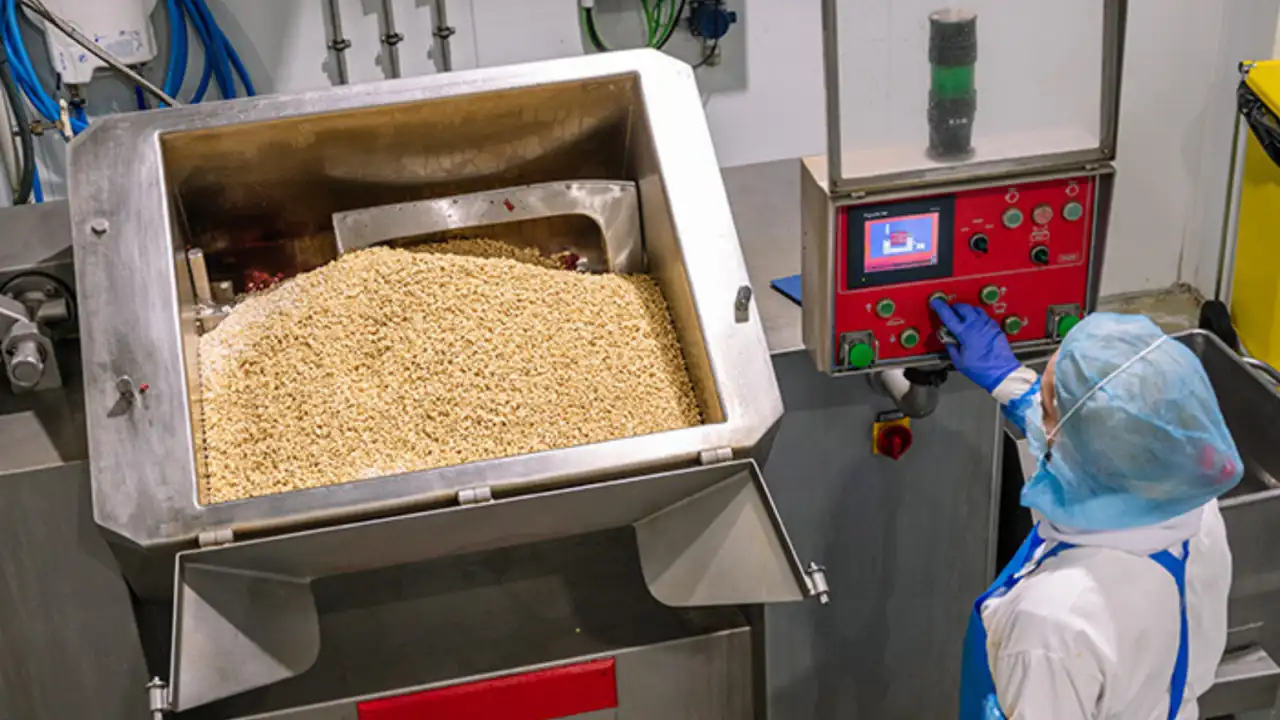
- Hydration is critical in dry plant-based texturates, because it determines bite, juiciness, cohesion, stability, and finished-product yield.
- It is not about adding more water, but the right amount: raw material, format, fibers, starches, mixing, temperature, and timing all affect absorption and retention.
- It must be validated under real industrial conditions, as scale-up can alter water distribution, final texture, batch-to-batch uniformity, and shelf life.
The importance of hydration in plant-based products becomes especially evident when working with dry plant-based texturates, as water management has a direct impact on texture, juiciness, cohesion and the overall performance of the finished product.
However, hydrating a texturate is not simply a matter of adding water. The amount of water available, absorption time, raw material selection and formulation characteristics all determine how the ingredient will behave once incorporated into the final product.
In this article, we explore how water is managed in dry plant-based texturates, which factors influence hydration, and why this process is critical for both product development and industrial-scale manufacturing.
Why Is Hydration Critical in Plant-Based Formulations?
Dry plant-based texturates need to absorb water in order to develop the functional properties they will later contribute to the finished product.
The amount of water absorbed and the ingredient’s ability to retain it can influence characteristics such as bite, juiciness, cohesion and formulation stability.
For this reason, hydration should be considered a key technological variable in plant-based product development, alongside raw material selection, formulation design and processing conditions.
Furthermore, water management begins long before the final formulation stage. In the case of dry texturates, there is an initial manufacturing phase during which the ingredient’s moisture content is reduced through controlled drying to ensure stability and suitability for storage. Later, when incorporated into a formulation, the texturate reabsorbs water to develop the required structure and functionality.
Relationship Between Hydration, Structure and Product Behaviour
When a dry texturate absorbs water, its structure changes and develops the properties required for integration into a formulation.
The amount of water incorporated and how it is distributed can affect factors such as water retention, cohesion and structural integrity within the finished product.
In a plant-based burger, for example, properly adjusted hydration helps create a more homogeneous matrix and ensures consistent performance throughout processing.
Impact of Insufficient or Excessive Hydration
Both insufficient and excessive hydration can create manufacturing challenges.
If the texturate does not absorb enough water, some particles may remain under-hydrated, reducing their ability to integrate correctly within the product matrix.
Conversely, excessive water can make it more difficult to achieve a sufficiently stable structure and may alter formulation performance during subsequent processing steps.
The goal is not to incorporate as much water as possible, but to reach the optimum hydration level for the characteristics and processing requirements of each product.
Formulation Factors That Influence Hydration
Water absorption and retention depend not only on the texturate itself but also on the other ingredients present in the formulation and the processing conditions applied.
Raw Material Type and Water Absorption Capacity
Each plant-based raw material behaves differently when exposed to water.
At Sanygran, we work with texturates produced from soy, pea and plant-based blends, including Legumeat®, which is manufactured from soy flour, bean flour and rice flour.
Differences in composition and ingredient structure can affect hydration behaviour.
Physical factors such as texturate particle size also play an important role. A fine granule and a larger-format texturate will not necessarily absorb water at the same rate or to the same extent.
For this reason, texturate selection should always take the intended application into account.
Proteins, Fibres, Starches and Other Functional Ingredients
Hydration should never be assessed in isolation.
Plant proteins, fibres, starches and other functional ingredients can influence both the amount of water available and the way water is distributed throughout the product.
This can affect properties such as viscosity, cohesion, water retention and final texture.
As a result, a hydration level that performs well in one formulation may require adjustment when the product composition changes.
How Is Hydration Managed in Industrial Processing?
In an industrial environment, managing hydration means ensuring that both the ingredient and the formulation behave consistently and predictably.
The way water is incorporated depends on the application and manufacturing process. In some developments, the texturate may be hydrated before being added to the recipe. In others, the water already present in the formulation and the processing conditions allow the ingredient to develop its required properties.
The key objective is to ensure that the system has been validated under real manufacturing conditions.
Process Parameters That Affect the Final Result
Variables such as temperature, mixing time, water availability, mixing intensity and ingredient addition sequence can all influence texturate performance.
For example, a texturate that remains in a mixture for several minutes before moving to the next production stage will not experience the same hydration conditions as one that is processed immediately after incorporation.
This is why standardising process conditions is essential to minimise batch-to-batch variation.
From Laboratory to Industrial Production
A formulation that performs well at laboratory scale may not behave identically once production is scaled up.
Equipment size, mixing capacity, processing times and manufacturing conditions can all change water distribution and therefore influence final texture.
For this reason, it is important to validate texturate performance under real production conditions before industrialising a product.
Relationship Between Hydration and Final Product Quality
Water management affects more than just the technical performance of a texturate. It can also influence attributes that are perceived in the finished product, particularly where consistency between batches is required.
Appearance and Matrix Uniformity
A uniform distribution of water contributes to a consistent product matrix. Conversely, variations in water incorporation or availability can lead to differences in appearance and structure.
This is particularly important in products where the texturate forms part of the final matrix, such as plant-based burgers, fillings and prepared plant-based meals, where uniformity is closely linked to quality perception.
Juiciness and Eating Experience
The amount of water retained within a product can also influence the perception of juiciness during consumption. However, this attribute is not determined solely by hydration level. The overall formulation, protein selection, fibres, starches and manufacturing process also contribute to the final result.
For this reason, hydration should always be evaluated alongside the other variables that define product functionality and sensory performance.
Hydration and Product Shelf Life
Moisture management is particularly important in dry plant-based texturates, as product stability depends heavily on maintaining controlled moisture levels.
Moisture, Stability and Food Safety
During dry texturate manufacturing, moisture is reduced in a controlled manner to obtain a stable ingredient suitable for storage.
At Sanygran, extrusion products are produced within controlled moisture ranges, and every batch is verified before release to ensure it complies with established quality specifications.
If the ingredient has not yet reached the target moisture level, drying continues until the required value is achieved.
This stage is essential to ensure that the texturate can be stored and transported under the intended conditions before it is incorporated into a formulation.
Sanygran: Plant-Based Texturates Adapted to Every Application
Water management does not end once the texturate has been manufactured. Its behaviour during hydration must match the requirements of the final formulation.
At Sanygran, we work with soy texturates, pea texturates and solutions such as Legumeat®, which can be used in a wide range of industrial applications, including plant-based burgers, nuggets, fillings, sauces, plant-based Bolognese products and prepared meals.
From Ingredient to Finished Product
Working with a supplier that understands both the texturate and its final application makes it easier to evaluate ingredient performance under real manufacturing conditions.
At Sanygran, we develop solutions tailored to each application, taking hydration, texture, formulation and processing requirements into account.
Because in plant-based food manufacturing, effective water management is essential for developing products that are stable, functional and capable of delivering the intended eating experience.
Contact:
📞 +34 937 132 324
✉️ info@sanygran.com
Other articles you may be interested in:
- Plant-Based Food Development
- Plant-Based Solutions Provider
- Plant-Based Burger Supplier
- Wholesale Pea Starch Supplier
- Organic Tofu Supplier
- Organic Hummus Supplier
- Plant-Based Chicken Supplier
- Plant-Based Beef Supplier
- Plant-Based Seafood Alternatives Supplier
- Vegan Tuna Supplier
- Plant-Based Meat Analogues Supplier
- Pea Protein Concentrate Supplier
- Plant-Based Chunks Supplier
- Texturised Plant-Based Meat Supplier