How to prepare a plant-based product for food audits and large retailers
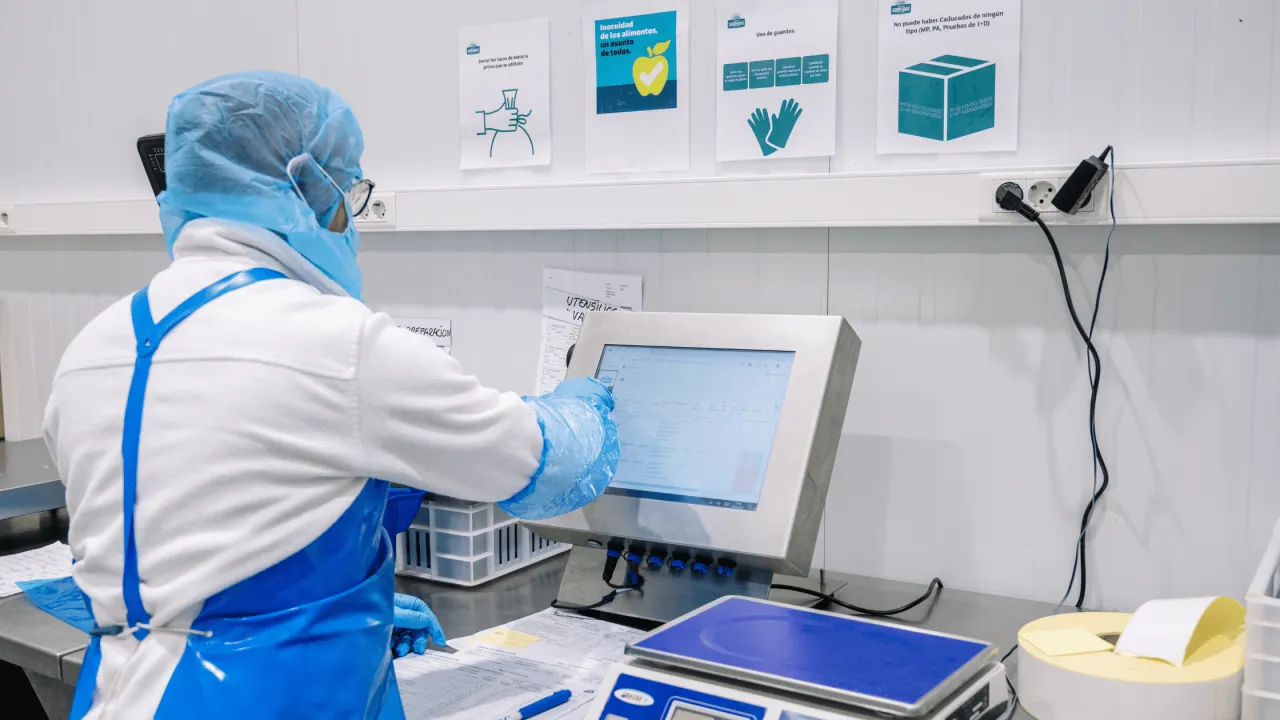
- Preparing a plant-based product for an audit requires demonstrating safety, stability, traceability, and industrial repeatability, not just an appealing recipe or strong laboratory results.
- The audit reviews formulation, labeling, claims, suppliers, shelf life, and technical documentation, ensuring consistency between what is declared, manufactured, and marketed.
- Preparation must begin during development: align quality, production, procurement, and R&D, validate under real conditions, and ensure consistency, reliable supply, and incident management.
Preparing a plant-based product for food audits requires much more than developing an attractive recipe for consumers. In the food industry, a product must demonstrate that it is safe, stable, traceable and reproducible at industrial scale.
This becomes especially relevant when working with large retailer audits, approval processes, private label projects or professional customers who need to ensure that the product meets all technical requirements before reaching the market.
From formulation to documentation, every stage of development must be aligned to guarantee that the product works not only in the laboratory, but also during manufacturing, distribution and throughout its shelf life.
What is reviewed during a food audit for a plant-based product?
An audit does not only assess the final product. Behind every plant-based product there is a complete system that needs to be controlled: ingredients, suppliers, processes, traceability and quality.
When preparing for large retailer audits, these controls are usually even more demanding, as retailers look for products that can maintain consistent quality across high production volumes and different commercial cycles.
Beyond sensory aspects such as flavour or texture, audits typically review:
- food safety
- regulatory compliance
- product stability
- batch-to-batch consistency
- manufacturing capacity
- supplier control
Food safety, compliance and product quality
The starting point is ensuring that the product complies with applicable regulations and remains safe throughout its shelf life.
This involves controlling:
- microbiological stability
- product specifications
- labelling requirements
- storage conditions
For chilled, frozen or ready-to-eat plant-based products, shelf life validation is particularly important, as it must guarantee not only safety, but also the quality perceived by consumers.
A product may perform well during initial development but require adjustments when scaled up industrially. This is why validation under real manufacturing conditions is essential.
Consistency between formulation, label and commercial claims
One of the most reviewed aspects during an audit is ensuring consistency between what the product communicates and what it actually contains.
In private label projects, it is common for the retailer itself to define the labelling and commercial claims. However, the manufacturer must ensure that these claims are technically achievable and properly supported by:
- product formulation
- ingredients used
- manufacturing process
- available documentation
This becomes particularly important when working with functional ingredients such as plant proteins, texturised proteins or starches, where each component has a direct impact on the final product performance.
Industrial capacity and supply reliability
For a retailer or industrial customer, a product is not validated simply because it works once. It must demonstrate that it can remain stable over time.
Industrial capability means ensuring:
- process repeatability
- batch consistency
- raw material availability
- supply reliability
In plant-based development, ingredient selection and behaviour during processing can make the difference between a recipe that works during initial trials and a solution ready for continuous production.
Technical documentation required before an audit
Documentation is a key part of any approval process. Having information available is not enough: it must be updated and accurately reflect the product being manufactured.
Product specification and technical data sheet
The technical data sheet must include the information required to evaluate and control the product:
- composition
- format
- storage conditions
- shelf life
- preparation instructions
- nutritional information
- microbiological and physicochemical parameters
One of the most common issues during audits is finding differences between approved documentation and the actual product manufactured.
Ingredients, allergens and raw material origin
Each ingredient must be correctly identified and documented.
This includes information about supplier, origin, technological function, allergens and technical specifications.
In plant-based solutions, ingredients such as plant-based texturisers, proteins or functional systems can directly influence texture, stability and industrial performance.
Shelf life studies and product performance
Shelf life should not only be evaluated from a microbiological perspective.
It is also important to assess how the product evolves during storage:
- texture
- appearance
- stability
- behaviour after preparation or regeneration
This is especially relevant for products where plant-based structures may change over time.
Traceability, suppliers and incident management
Traceability allows manufacturers to demonstrate that every product can be tracked from raw materials through to the final batch.
A robust system should connect:
- ingredient batch
- production order
- quality controls performed
- finished product
- customer receiving the product
Approval of critical suppliers
Suppliers are part of the final product quality system.
Before working with an ingredient, it is important to evaluate aspects such as:
- supply reliability
- available documentation
- quality control
- technical capability
For plant-based ingredients, working with a specialised manufacturer helps .
Managing non-conformities and product recalls
Any company prepared for audits must have clear procedures to manage potential incidents.
This includes:
- identifying the issue
- blocking affected product
- investigating root causes
- implementing corrective actions
- carrying out recall simulations
How to prepare an audit with a practical approach
An audit does not start when the auditor arrives. It starts during product development.
Before presenting a product to a retailer or industrial customer, it is important to ensure consistency between:
- formulation
- manufacturing process
- documentation
- labelling
- suppliers
In addition, all teams involved — quality, production, purchasing and R&D — must be aligned.
Experience shows that many issues do not come from a lack of information, but from small differences between departments that eventually affect the final product.
How Sanygran helps develop plant-based products ready for approval
At Sanygran, we approach plant-based development from a complete industrial perspective: ingredient, process and final product.
As a manufacturer of plant-based solutions, we do not only develop ingredients such as plant-based texturised proteins, concentrates and starches, but also use them in our own finished products. This allows us to understand first-hand how to integrate them into real formulations and industrial processes.
We support manufacturers, plant-based brands and customers working with retail in areas such as:
- ingredient selection and adaptation
- texture and stability optimisation
- formulation adjustments
- industrial scale-up
adaptation to channel requirements
Because a food audit — and especially a large retailer audit — is not passed by preparing documents at the end of the process. It is built from the beginning by developing a product that is stable, safe and ready to perform both in the factory and in the market.
Contact:
📞 +34 937 132 324
✉️ info@sanygran.com
Other articles you may be interested in:
- Plant-Based Food Development
- Plant-Based Solutions Provider
- Plant-Based Burger Supplier
- Wholesale Pea Starch Supplier
- Organic Tofu Supplier
- Organic Hummus Supplier
- Plant-Based Chicken Supplier
- Plant-Based Beef Supplier
- Plant-Based Seafood Alternatives Supplier
- Vegan Tuna Supplier
- Plant-Based Meat Analogues Supplier
- Pea Protein Concentrate Supplier
- Plant-Based Chunks Supplier
- Texturised Plant-Based Meat Supplier