The Importance of Bite and Cohesion in Plant-Based Products
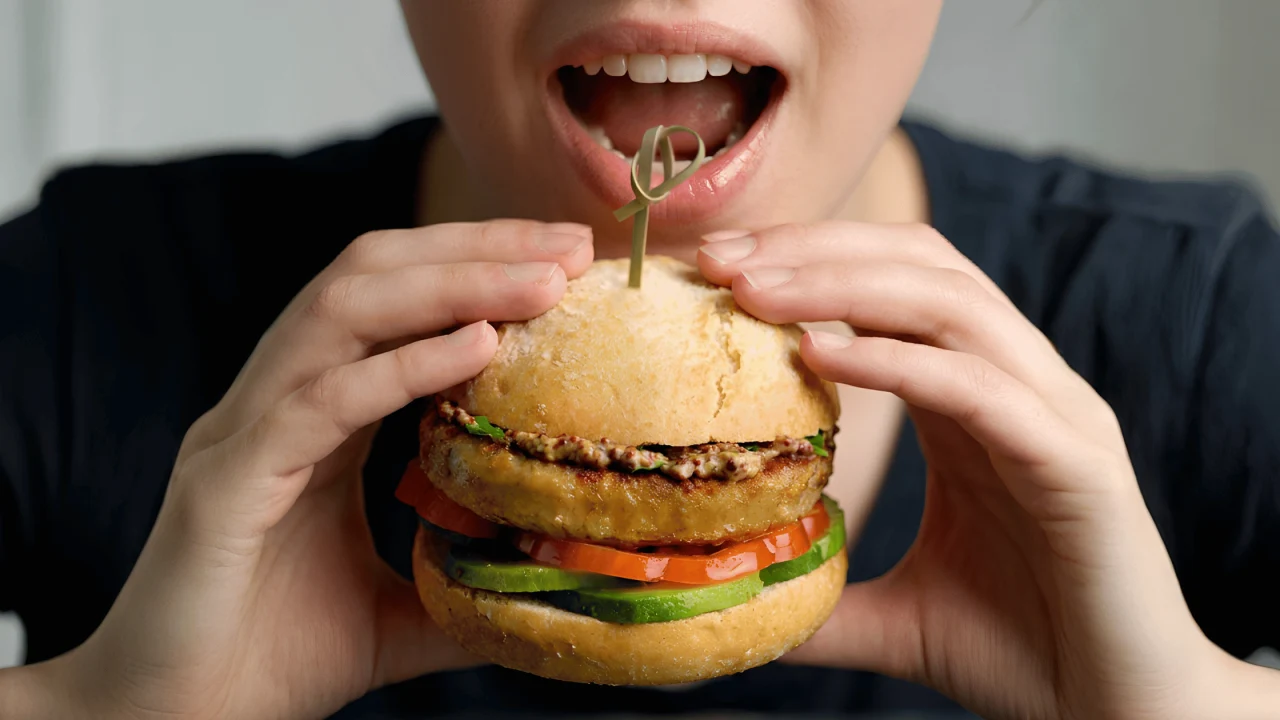
- Bite and cohesion define the real quality of a plant-based product: they influence texture, stability, consumer experience, and repeat purchase.
- Poor cohesion creates industrial issues: breakage, crumbling, purge, loss of shape, rework, waste, returns, and batch-to-batch variability.
- The final result depends on formulation and process: texturized proteins, fibers, moisture, fat, mixing, forming, heat treatment, freezing, and storage must be validated under real conditions.
In this article, we explore the importance of bite and cohesion in plant-based products—two key attributes that directly influence the quality, stability and consumer acceptance of any plant-based food.
When developing a meat alternative, achieving an appealing flavour profile or strong nutritional credentials is not enough. Texture, bite and cohesion determine how a product performs throughout manufacturing, thermal processing, storage and consumption.
Beyond enhancing the consumer experience, a well-designed structure helps reduce production issues, maintain batch-to-batch consistency and support industrial-scale production. For this reason, these attributes should be considered from the formulation stage and validated under real manufacturing conditions.
What Do Bite and Cohesion Bring to a Plant-Based Product?
Bite and cohesion are among the most influential factors in how consumers perceive the quality of a plant-based product.
In applications such as plant-based burgers and chicken-style pieces, these characteristics determine whether the product maintains its structure, withstands processing effectively and delivers a consistent eating experience throughout its shelf life.
A strong formulation should allow the product to retain its integrity from the production line through to consumption, preventing changes that could negatively affect texture or appearance.
Bite: Firmness, Resistance and Mouthfeel
Bite refers to the firmness, elasticity and resistance to cutting of a product. It is not simply about replicating the texture of meat, but rather creating a mouthfeel that is appropriate for the intended application.
This attribute depends on the interaction between plant proteins, fibres, starches, fats and water, as well as how these ingredients behave during industrial processing.
For this reason, a formulation that performs well in laboratory conditions should also be validated at industrial scale, where factors such as mixing, heat treatment and storage can alter product performance.
Cohesion: Structural Integrity Throughout Processing and Consumption
Cohesion refers to a product’s ability to remain intact throughout all stages of manufacturing and distribution.
When cohesion is insufficient, issues such as breakage during forming, crumbling, loss of shape, water release and visual defects may occur, affecting both perceived quality and process efficiency.
As a result, cohesion should be assessed before and after operations such as cooking, pasteurisation, freezing and reheating, ensuring the product remains stable throughout its shelf life.
Why Are These Attributes Critical in the Plant-Based Industry?
In the food industry, bite and cohesion are more than sensory characteristics. They also influence industrial viability, batch repeatability and overall project profitability.
A consistent texture supports efficient production, reduces variation and helps ensure the product reaches consumers with the intended characteristics established during development.
Impact on Quality Perception and Repeat Purchases
When a product delivers a consistent texture and satisfying bite, it becomes easier to meet consumer expectations and encourage repeat purchases.
In categories such as plant-based burgers and meat analogues, texture plays a decisive role in the overall product evaluation. Even small variations between batches can influence perceptions of quality.
From an industrial perspective, maintaining this consistency also makes life easier for R&D, Quality and Production teams by reducing manufacturing deviations.
Relationship with Waste, Returns and Product Stability
Insufficient cohesion can lead to issues that directly affect manufacturing performance, including:
- Breakage during forming
- Reworking within production
- Loss of shape during transport
- Water release (exudation)
- Customer complaints or product returns
Minimising these problems not only improves product quality but also helps reduce costs, optimise production efficiency and increase stability throughout distribution.
Formulation Factors That Determine Bite and Cohesion
The texture of a plant-based product begins to take shape long before it reaches the production line.
Ingredient selection and the balance between ingredients determine how the product will perform during mixing, cooking, storage and consumption.
The objective is not to add more ingredients, but to select those that provide the functionality required for the specific application.
Selecting Proteins, Fibres and Structural Matrices
Textured plant proteins are one of the foundations of products with a satisfying bite.
Depending on the application, solutions such as pea TVP, soy TVP or protein blends like Legumeat may be used. These combine different raw materials to achieve a balance between nutritional value and technological functionality.
Plant fibres also play an important role, helping improve water retention, cohesion and structural stability.
Ultimately, the final result does not depend on a single ingredient but on how all components interact within the formulation.
Moisture, Fat and Binding Systems
The balance between water, fat and binding systems has a direct impact on texture and juiciness.
Excess moisture can lead to structural weakness or water release, while insufficient hydration may result in dry products with an unpleasant bite.
Likewise, ingredients such as functional starches and specialised binding systems help stabilise the matrix and improve product performance during processing and storage.
Texturisation and Matrix Optimisation
The internal matrix largely determines the final eating experience.
By adjusting ingredients, hydration levels and structural systems, manufacturers can develop textures that are softer, more fibrous or more resistant to cutting, depending on the end application.
Rather than simply imitating a specific texture, the goal is to create a product that is stable, reproducible and aligned with market expectations.
Industrial Processes That Affect Bite and Cohesion
Even an excellent formulation can lose part of its functionality if the industrial process is not properly optimised.
Mixing, Forming and Compaction
The early stages of processing are critical for achieving a uniform structure.
Insufficient mixing may result in uneven ingredient distribution, while poor compaction can lead to products that are either fragile or excessively dense.
Controlling these parameters helps deliver products with a uniform bite, improved cohesion and greater batch-to-batch consistency.
Heat Treatment and Structural Stability
Heat treatment sets the product structure, but it can also alter it.
Processes such as cooking, pasteurisation and reheating may affect firmness, juiciness and water retention.
This is why products should be developed with the entire industrial journey in mind, rather than focusing solely on the point of manufacture.
Chilling, Freezing and Storage
The cold chain also has a significant impact on the texture of plant-based products.
Validating product performance throughout its shelf life helps ensure consistent quality until it reaches the consumer.
How Are Bite and Cohesion Evaluated During Product Development?
Achieving excellent texture requires combining development expertise with objective validation tools.
The aim is to verify that the product behaves as expected during manufacturing and maintains consistency across production batches.
Sensory Testing and Internal Panels
Sensory assessments allow teams to evaluate characteristics such as bite, cohesion, juiciness and overall uniformity.
These tests help identify differences between formulations before scaling up production.
Instrumental Testing and Consistency Control
Instrumental measurements complement sensory evaluations with objective data.
They enable manufacturers to compare batches, validate formulation changes and reduce process variability, supporting the work of R&D, Quality and Production teams.
Combining both approaches provides a far more reliable understanding of real product performance.
Applications Where Bite and Cohesion Make the Difference
While these attributes are important across all plant-based products, there are certain applications where their influence is particularly critical.
Prepared Meals and Ready-to-Eat Solutions
In prepared meals, products must maintain their structure after processing, transport and reheating.
Good cohesion helps prevent breakage and preserve presentation, while a balanced bite enhances the eating experience even after warming.
Chilled and Frozen Products
Products intended for chilled or frozen distribution must withstand temperature fluctuations without losing firmness or stability.
A well-developed formulation reduces issues such as water release, loss of cohesion and texture changes following thawing.
Retail Formats
In retail environments, products must maintain a consistent appearance throughout the entire supply chain.
Withstanding handling, transportation and shelf display is just as important as delivering excellent flavour, as any deterioration in texture can affect quality perception and purchasing decisions.
What Should Food Manufacturers Look for in a Plant-Based Supplier Regarding Bite and Cohesion?
When developing a plant-based product, selecting the right ingredients is only part of the equation. It is equally important to work with a partner who understands how formulation, processing and storage conditions interact to achieve a stable and consistent texture in production.
At Sanygran, we work with both functional ingredients and finished plant-based products, allowing us to validate the performance of textured proteins, fibres, starches and protein blends in real-world applications.
Because a satisfying bite and reliable cohesion do not depend on a single ingredient. They are the result of the right balance between formulation, industrial processing and validation.
Contact:
📞 +34 937 132 324
✉️ info@sanygran.com
Other articles you may be interested in:
- Plant-Based Food Development
- Plant-Based Solutions Provider
- Plant-Based Burger Supplier
- Wholesale Pea Starch Supplier
- Organic Tofu Supplier
- Organic Hummus Supplier
- Plant-Based Chicken Supplier
- Plant-Based Beef Supplier
- Plant-Based Seafood Alternatives Supplier
- Vegan Tuna Supplier
- Plant-Based Meat Analogues Supplier
- Pea Protein Concentrate Supplier
- Plant-Based Chunks Supplier
- Texturised Plant-Based Meat Supplier