How does syneresis affect plant-based food production?
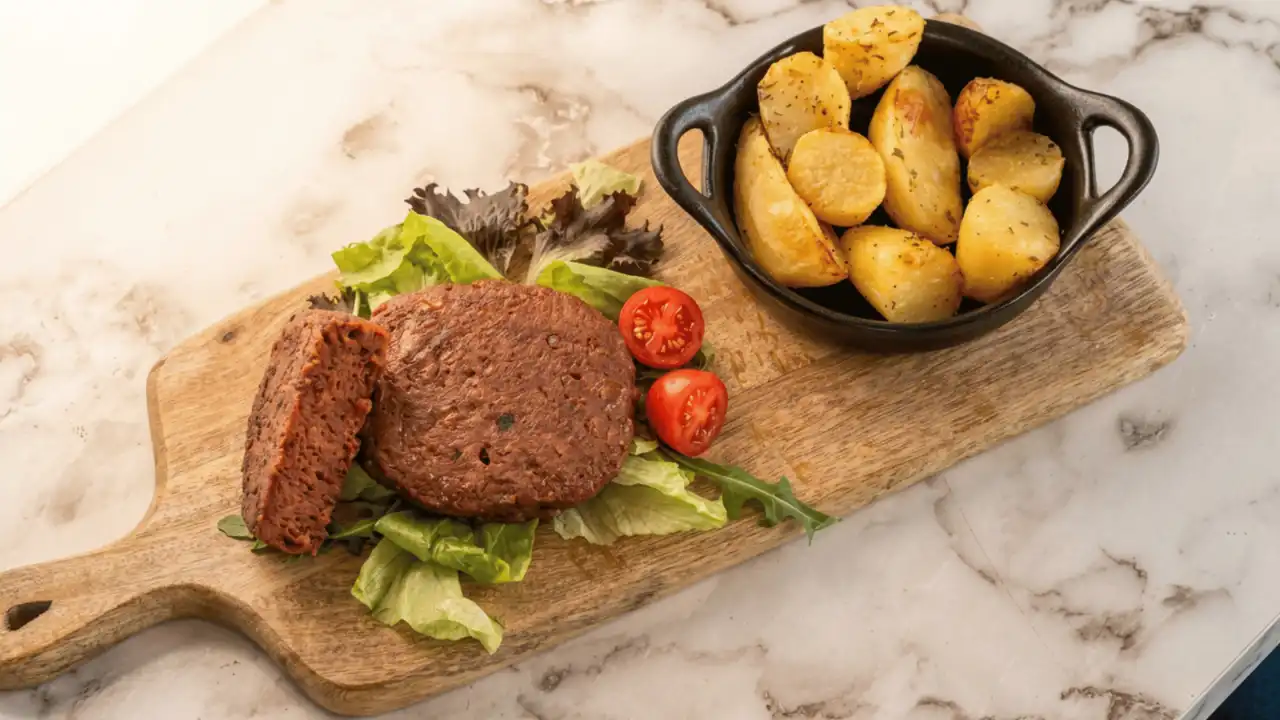
- Syneresis is the release of liquid from plant-based matrices; it causes loss of structure, cohesion, and stability, and shows up as visible purge in the pack.
- It affects both sensory quality and profitability: lower juiciness/creaminess, worse appearance, shorter shelf life, higher waste and complaints, and it often forces reformulation and plant adjustments.
- Control requires both formulation and processing: ingredient addition order, hydration, mixing, thermal profile, and cooling; validate at pilot/industrial scale with shelf-life and batch repeatability tests.
Syneresis in plant-based food production is one of the most critical phenomena in the development of plant-based products, as it directly impacts texture, stability, appearance and industrial performance. In this article, we explore what syneresis actually is, why it occurs in plant-based formulations, how it affects production processes, and which industrial strategies are commonly used to control it in products such as plant-based burgers, ready meals and fillings.
What is syneresis?
Syneresis is the expulsion or separation of the liquid phase (water or other liquids) within a food matrix, resulting in the loss of structure, stability and product cohesion.
In food science, this phenomenon is described as the release of liquid phase in gelled or structured systems, especially when the network formed by proteins, starches or hydrocolloids is not stable enough to retain water during storage or processing (Phillips & Williams, Food Hydrocolloids, Woodhead Publishing).
In plant-based food production, this issue is particularly relevant because the product structure depends on a complex combination of plant proteins, starches, fibres, fats and hydrocolloids. When this network is not properly balanced, water separates and the product loses consistency.
How does syneresis appear in a plant-based product?
In an industrial environment, syneresis is not a theoretical concept, but a visible issue in the finished product:
- liquid appearing in trays or packaging
- surface exudation after storage
- loss of body and firmness
- less homogeneous texture after cooking or reheating
- phase separation in sauces or mixed matrices
In short, the product stops behaving as a stable structure and begins to show visible physical instability throughout the supply chain and at retail level.
Effects of syneresis in plant-based food production
Syneresis does not only affect the final product, but also impacts industrial efficiency, perceived quality and production profitability.
Impact on texture, appearance and product stability
One of the most immediate consequences is the loss of functional texture:
- reduction in controlled juiciness
- loss of creaminess or bite
- lower stability during cutting or forming
- less attractive appearance
In plant-based products, where the sensory experience is essential, this becomes critical: if the product “sweats” or loses structure, the perception of quality quickly declines.
Impact on shelf life, waste and complaints
From an industrial perspective, syneresis has direct business consequences:
- increased production waste
- batch-to-batch variability
- reduced commercial shelf life
- potential complaints or product returns
- need for product reformulation
During the development of new plant-based burgers, for example, it is common to encounter these issues in early stages. In many cases, small adjustments in formulation and ingredient selection are enough to stabilise the system and restore the expected production performance.
Which plant-based categories are most sensitive to syneresis?
Not all applications behave in the same way. Some matrices are particularly sensitive to water instability within the system.
Fermented products, desserts and chilled plant-based bases
In products such as plant-based yoghurts, spoonable desserts or chilled creams, syneresis may lead to:
- visible liquid separation
- loss of creamy textura
- instability throughout shelf life
In these products, gelled or semi-gelled structures are especially sensitive to small formulation imbalances.
Sauces, fillings, spreads and plant-based ready meals
This is one of the most critical segments in plant-based food production.
It includes products where stability is essential:
- plant-based Bolognese-style sauces
- fillings for pasta or prepared meals
- ready-to-use bases for foodservice or retail
Syneresis directly affects homogeneity, viscosity and processing performance, especially during chilled or frozen storage and distribution.
How to reduce syneresis through the industrial process?
Controlling syneresis does not depend only on formulation, but also on the entire industrial process.
Critical parameters to validate at industrial plant level
Among the most relevant factors are:
- ingredient addition sequence
- hydration times
- mixing and homogenisation intensity
- cooking or pasteurisation thermal curve
- product cooling and stabilisation
In plant-based products, the way the matrix is structured during processing is just as important as the ingredients themselves.
How to verify that the solution works beyond the laboratory
A development is not validated in the laboratory alone, but under real production and distribution conditions:
- shelf-life testing
- accelerated stability tests
- behaviour after transport and storage
- batch repeatability
- validation under real commercial conditions
This is what ensures that the product behaves consistently in production, logistics and at point of sale.
What should the industry look for in a solution to control syneresis?
There is no universal solution for every case. The key lies in adapting the strategy to the complete system.
Adaptation to matrix, process and sales channel
Syneresis control depends on three key variables:
- type of food matrix
- industrial process used
- sales channel and distribution conditions
In this context, expertise in the formulation of functional plant-based ingredients is essential for designing stable systems that perform under real production conditions and not only in laboratory environments.
Our solutions: Ingredient innovation for complete stability
At Sanygran, controlling phenomena such as syneresis is approached from a complete industrial perspective: ingredient, process and final application.
Our expertise in manufacturing pea and soy textured proteins, together with the use of pea starch and pea protein concentrate, allows us to develop solutions that help improve water retention, matrix stability and process performance.
This translates into direct benefits for the industry:
- improved stability in plant-based products
- reduction of exudation and structure loss issues
- optimisation of industrial production processes
- greater batch-to-batch consistency
- fewer incidents during retail distribution
The objective is not only to make the product work in formulation, but to ensure that it maintains its structure and behaviour throughout the entire value chain, from production to final consumption.
Other articles you may be interested in:
- Plant-Based Food Development
- Plant-Based Solutions Provider
- Plant-Based Burger Supplier
- Wholesale Pea Starch Supplier
- Organic Tofu Supplier
- Organic Hummus Supplier
- Plant-Based Chicken Supplier
- Plant-Based Beef Supplier
- Plant-Based Seafood Alternatives Supplier
- Vegan Tuna Supplier
- Plant-Based Meat Analogues Supplier
- Pea Protein Concentrate Supplier
- Plant-Based Chunks Supplier
- Texturised Plant-Based Meat Supplier