How to Reduce Time-to-Market for New Plant-Based Products?
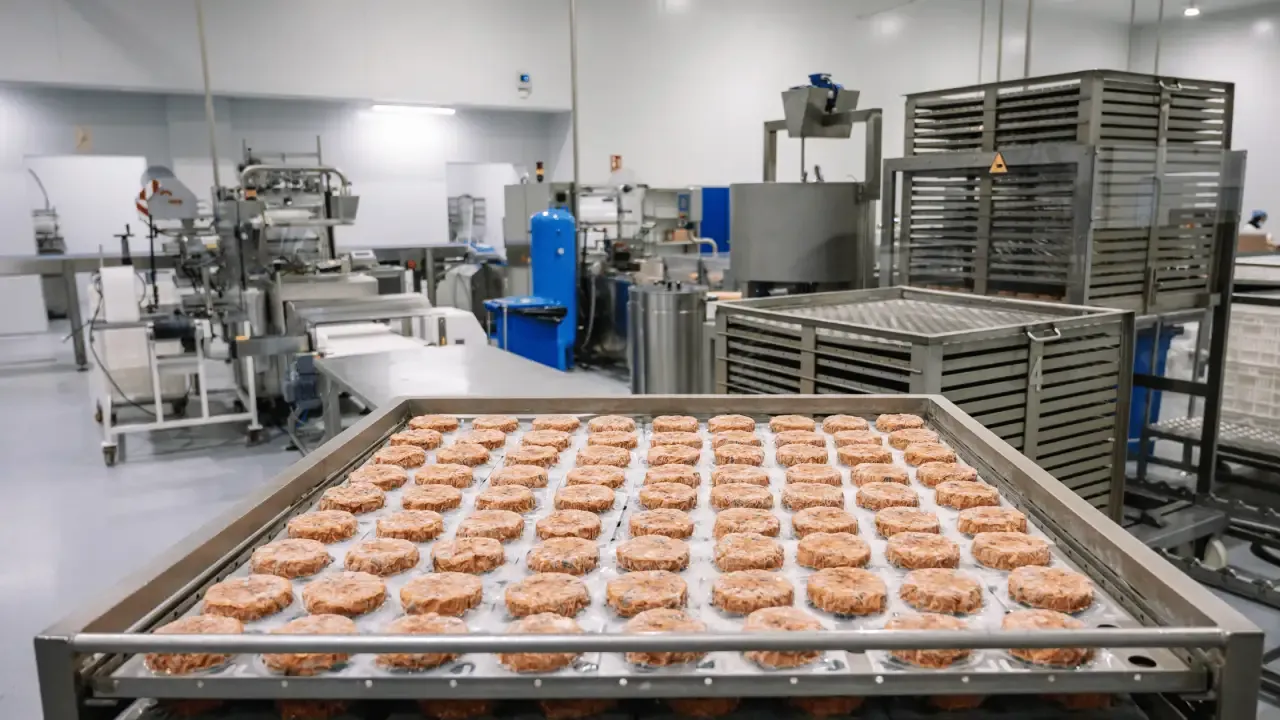
- Speeding up time-to-market is critical to capture fast-moving trends and secure shelf space: the category is growing, competition is tightening, and retailers expect profitable launches quickly.
- The biggest delays come from repeated reformulations, lab-to-industrial scale-up issues, and process fine-tuning. Reduce them with clear success criteria, agile prototyping, and early technical validation.
- Engineer for production from day one: use industrially validated ingredients, ensure compatibility with existing lines, lock in supply and packaging, and address regulatory/labeling requirements upfront.
Reducing time-to-market for new plant-based products has become a strategic priority for food manufacturers and retailers looking to compete in the rapidly growing alternative protein sector. In a market where food trends evolve quickly and innovation cycles are increasingly short, accelerating the process from product concept to commercial launch can determine whether a brand leads a category or arrives too late to the shelf.
Market growth reinforces this urgency. According to industry estimates (Fact.MR), the European plant-based meat market could exceed $15 billion over the next decade, driven by increasing demand for alternative proteins and ongoing innovation in plant-based food development.
In Spain, the trend is equally strong. The plant-based sector reached €572 million in sales in 2023, growing by 9.4%, with forecasts pointing to annual growth of around 10% in the coming years.
In this article, we explore how to optimise each stage of plant-based product development — from concept creation to industrial production — to shorten development cycles, reduce reformulation work, and ensure an efficient and profitable product launch.
Why Reducing Time-to-Market in Plant-Based Products Is an Industrial Priority?
¿The plant-based food market in Europe continues to grow, driven by changing consumer habits, increased environmental awareness and the rise of flexitarian diets.
In Spain, more than one third of consumers already buy plant-based products regularly or occasionally, confirming that the category has moved beyond niche status and is becoming mainstream.
Retail channels also play a crucial role. Supermarkets represent around 76% of plant-based product sales, making retail the main gateway for consumers.
In this environment, reducing product development timelines has become a strategic necessity due to:
- rapidly evolving consumer trends
- growing competition between brands and private labels
- high shelf turnover in emerging food categories
- the need to launch profitable products faster
Simply put, the faster a plant-based product reaches the market, the greater its ability to capture emerging demand.
Stages of Plant-Based Product Development and Where Delays Occur
Developing a plant-based food product usually involves several stages before reaching the market:
- product conceptualisation
- initial formulation
- laboratory prototype development
- pilot testing and industrial scaling
- sensory and technical validation
- industrial production
Where Do Delays Typically Occur?
The most common delays in plant-based product development occur in three critical areas:
- multiple reformulations to improve texture or flavour
- difficulties scaling recipes from laboratory to industrial production
- technical adjustments in processing steps such as forming, cooking or coating
For example, a recipe that works perfectly in the R&D laboratory may behave differently at industrial scale. The mixture may stick to machinery, the product may become too soft or unstable, or the coating may fail to adhere properly.
When this happens, development teams must return to earlier stages of the process, significantly increasing time-to-market.
Market Research for Faster and More Viable Product Decisions
Before starting technical product development, it is essential to have clear market insights.
Effective plant-based market research usually includes:
- analysis of plant-based food trends
- benchmarking competing products
- identifying opportunities on retail shelves
- validating the product concept
Europe is one of the most dynamic regions for plant-based innovation. Spain is already the fourth largest plant-based market in Europe, highlighting the sector’s strong growth potential.
In many cases, private label plant-based products still have significant room for expansion, especially in categories such as meat alternatives and plant-based ready meals.
Validating opportunities early helps avoid strategic changes when development is already advanced.
Agile Development Methodologies for Plant-Based Innovation
Applying agile product development methodologies allows companies to shorten testing cycles and accelerate product launches.
The most effective practices include:
- iterative prototype development
- early technical validation
- continuous collaboration between R&D and commercial teams
- decision-making based on rapid testing
Clearly Defined Product Objectives from the Start
Defining key development parameters early is essential, including:
- target texture
- sensory profile
- product format
- distribution channel
- nutritional requirements
- target cost structure
The clearer the product objectives from the beginning, the fewer reformulations and delays will occur later.
Formulation and Ingredients Designed for Industrial Scaling
A well-designed formulation simplifies the transition from prototype to industrial production.
For plant-based food manufacturing, this means selecting ingredients that:
- provide structure and stability
- perform reliably in industrial food processing
- maintain flavour and texture after processing
- ensure consistency and repeatability
For example, plant proteins and functional textured ingredients allow manufacturers to develop meat analogues with improved texture and better performance during industrial processing.
Selecting Functional Ingredients Ready for Production
Using ingredients already validated at industrial scale significantly reduces the risk of costly reformulations.
Companies that develop plant proteins, textured ingredients and functional blends can integrate them directly into formulations, accelerating the development of products such as:
- plant-based burgers
- plant-based nuggets or schnitzel-style products
- protein bites for prepared meals
- plant-protein bases for ready meals
Rapid Prototyping and Efficient Technical Validation
Rapid prototyping is a key strategy for reducing time-to-market.
Early laboratory testing allows teams to:
- validate recipe feasibility
- adjust flavour and texture
- evaluate ingredient performance
Industrial pilot tests then confirm that the product behaves correctly under real production conditions.
Fast prototyping reduces the number of development iterations required before launch.
Industrial Scaling Without Friction or Quality Loss
The transition from laboratory development to industrial manufacturing is one of the most critical stages in plant-based innovation.
To avoid scaling issues, companies must consider from the beginning:
- mixture behaviour during mixing or kneading
- stability during thermal processing
- final product consistency at high production volumes
- process repeatability
Technologies such as wet extrusion and dry extrusion enable the production of textured plant proteins and meat analogues that can be used in multiple food applications.
Integrating Products into Existing Production Lines
A key factor in accelerating product launches is designing formulations that fit existing manufacturing infrastructure.
When a product requires major modifications to machinery or processes, development timelines increase significantly.
In contrast, recipes compatible with standard food processing technologies — such as mixing, forming, coating and packaging — allow faster industrial trials and quicker market entry.
Optimising the Supply Chain from the Development Stage
Another common cause of delays in plant-based product launches is ingredient or packaging availability.
For this reason, companies should anticipate:
- availability of plant protein ingredients
- supply chain stability
- required production capacity
- distribution logistics
Integrating supply chain considerations early helps avoid delays when the product is ready for manufacturing.
Managing Regulatory Requirements and Labelling Efficiently
Plant-based foods in Europe must comply with several regulatory requirements, including:
- nutritional labelling
- vegan claims
- organic certifications
- ingredient compliance
Considering these factors during product development allows companies to prepare packaging and technical documentation without delaying product launch.
Co-Development with Industrial Partners to Accelerate Time-to-Market
One of the most effective ways to accelerate plant-based product development is through co-development with specialised industrial partners.
This approach enables companies to:
- adapt formulations to existing manufacturing processes
- reduce unnecessary testing phases
- accelerate industrial scaling
- ensure technical feasibility
Working with partners who control multiple stages of the plant-based value chain — from ingredients and formulation to industrial production — allows for a faster transition from concept to market launch.
Contact Us to Reduce the Time-to-Market of Your Plant-Based Products
If you are developing new plant-based foods or meat alternatives and want to accelerate your product launch, our team can help optimise every stage of the process.
📞 +34 937 132 324 ✉️ info@sanygran.com
Other articles you may be interested in:
- Plant-Based Food Development
- Plant-Based Solutions Provider
- Plant-Based Burger Supplier
- Wholesale Pea Starch Supplier
- Organic Tofu Supplier
- Organic Hummus Supplier
- Plant-Based Chicken Supplier
- Plant-Based Beef Supplier
- Plant-Based Seafood Alternatives Supplier
- Vegan Tuna Supplier
- Plant-Based Meat Analogues Supplier
- Pea Protein Concentrate Supplier
- Plant-Based Chunks Supplier
- Texturised Plant-Based Meat Supplier
- Plant-Based Protein Supplier for Ready Meals