Ingredients to Improve the Nutritional Profile of Plant-Based Products
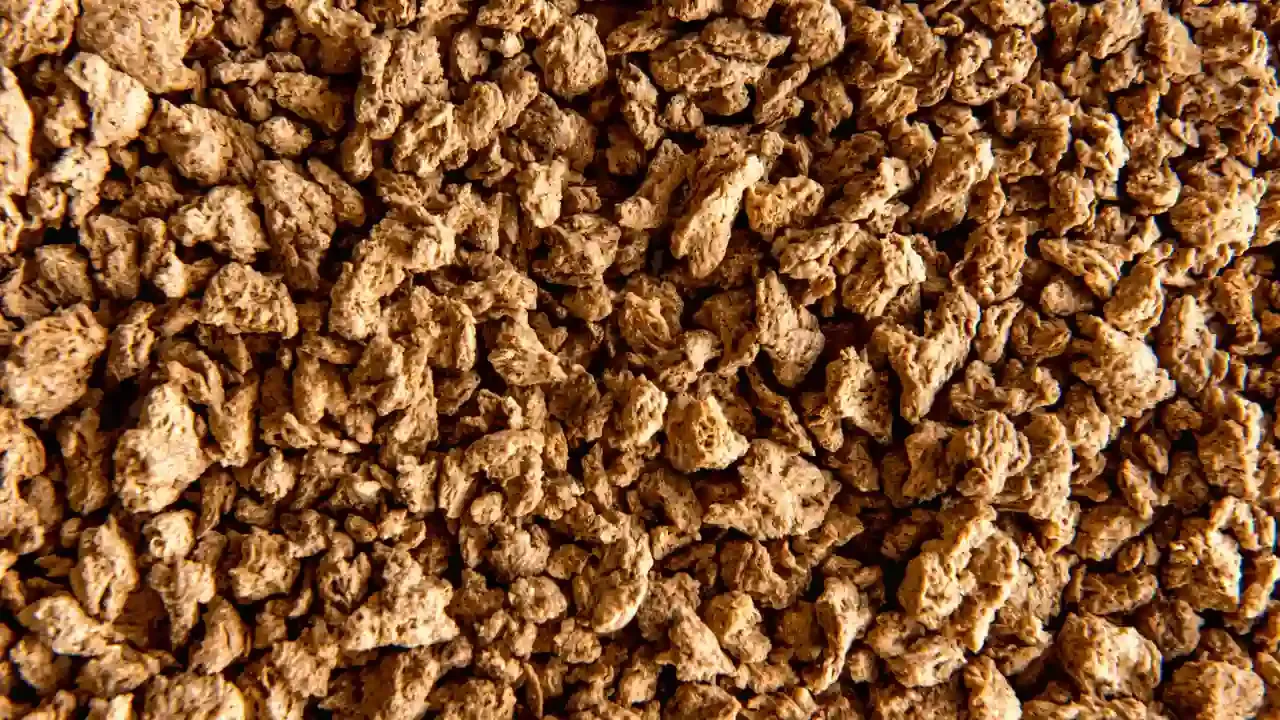
- Improving the nutritional profile starts with defining the objective: more protein, better balance, or less sugar, sodium, or saturated fat—without sacrificing texture or stability.
- Protein selection and combination are key: concentrates, isolates, texturates, and legume–cereal blends deliver nutrition, structure, and industrial functionality.
- Every reformulation must be validated at full scale: processing, shelf life, repeatability, labeling, and nutrition claims must remain consistent from laboratory to factory and market.
Improving the nutritional profile of plant-based products involves much more than simply increasing protein content or modifying a label. In the food industry, the selection of functional plant-based ingredients directly influences nutritional value, but also the texture, stability and industrial performance of the final product.
Developing a successful formulation requires understanding how ingredients interact with one another and how they behave throughout the entire process, from manufacturing and storage to final consumption.
Before reformulating a product, it is also important to define the objective clearly: higher protein content, a more balanced nutritional profile, a cleaner label or improved functionality. Only then is it possible to identify the most suitable combination of ingredients.
Plant Proteins to Improve Protein Content and Quality
Plant proteins are one of the main tools for improving the nutritional profile of a plant-based product, but simply increasing the percentage of protein is not always enough.
In an industrial formulation, it is essential to evaluate factors such as amino acid profile, digestibility and technological behaviour of each protein source.
A protein may offer excellent nutritional value, but if it is not properly integrated into the formulation, it can negatively affect texture, hydration or product stability.
For this reason, in plant-based food development, protein should be considered not only as a nutrient, but also as a functional ingredient.
Protein Concentrates, Isolates and Textured Proteins
Each plant protein format fulfils a different role within a formulation.
Protein concentrates help increase protein content while maintaining a balance between functionality and cost.
Protein isolates provide a higher concentration of protein, although they generally require greater formulation control to avoid impacts on texture and processing performance.
Textured vegetable proteins (TVP) play a distinct role: in addition to providing protein, they contribute to the structure and functionality of the final product.
In applications such as plant-based burgers, nuggets, fillings and ready meals, textured proteins help build the product matrix, improving texture, bite and processing stability.
The most suitable ingredient will depend on the desired final result and how the product is expected to perform during manufacturing and scale-up.
Combining Protein Sources for a Balanced Nutritional Profile
Relying on a single protein source is not always the most effective approach.
Combining different raw materials helps balance nutritional value while improving functional performance.
For example, blending proteins derived from legumes and cereals can deliver better results from both a nutritional and technological perspective.
In practice, formulation is not determined only by protein percentage, but also by how proteins interact with the rest of the ingredients and the industrial process.
Optimise Your Formulation Without Losing Functionality
Improving nutritional value should never come at the expense of manufacturing performance.
The challenge lies in balancing:
- nutritional value
- texture
- stability
- cost
- sensory acceptance
A formulation change may improve one parameter while negatively affecting others.
For example, modifying a protein source can alter water absorption, cohesion and final structure.
This is why successful optimisation requires analysing the formulation as a complete system.
Preserve Texture, Flavour and Stability
In plant-based products, texture depends on the interaction between proteins, water, starches, fibres and fats.
Functional ingredients play a crucial role in this matrix. Natural starches, for example, improve structure, water retention and stability.
Incorrect selection may lead to:
- loss of juiciness
- dry texture
- poor cohesion
- phase separation
A shorter ingredient list does not automatically mean a better formulation. Removing ingredients without understanding their function can compromise product quality and shelf-life performance.
Reduce Sugar, Sodium and Saturated Fat
Reducing specific nutritional components is a growing priority in the food industry.
However, these adjustments must be made while considering the formulation as a whole system.
Changing one ingredient can directly affect flavour, texture and consumer perception.
For this reason, nutritional optimisation often involves combining different strategies, including the selection of proteins, fibres, starches and functional ingredients.
The objective is not simply to remove ingredients, but to develop balanced and functional products.
Protect Nutrients During Processing
Industrial processing has a direct impact on the nutritional profile of the final product.
Factors such as temperature, processing time and storage conditions can affect the behaviour of proteins, fats and other nutrients.
Therefore, formulations must be validated across the entire production chain, not only during development.
Validate Plant-Based Ingredients at Industrial Scale
An ingredient may perform well in the lab but require adjustments in full-scale production.
Industrial validation ensures consistent performance under real manufacturing conditions.
Assess Shelf Life and Scalability
It is important to evaluate:
- product stability
- texture evolution
- storage behaviour
- batch-to-batch consistency
The goal is to ensure consistent performance from pilot to industrial scale.
Verify Labelling and Nutritional Claims
Any improvement in nutritional profile must be supported by accurate data.
This includes ensuring consistency between:
- formulation
- nutritional analysis
- final labelling
This is especially important for protein-related claims and other nutritional statements.
Develop a Formulation Tailored to Your Brand
Every product has different needs depending on application, channel and positioning.
Defining objectives early helps select the right ingredients and avoid unnecessary reformulation cycles.
The key is finding the optimal combination to achieve a product that performs both nutritionally and industrially.
Improve the Selection of Ingredients for Your Plant-Based Products with Sanygran
Developing products with an improved nutritional profile requires a complete approach covering both ingredients and application.
At Sanygran, we develop functional plant-based ingredients including yellow pea protein concentrate, pea starch and textured vegetable proteins.
As manufacturers of plant-based products, we also use our own ingredients in real applications such as burgers, nuggets and other plant-based solutions, giving us first-hand knowledge of how they behave during industrial processing.
Improving the nutritional profile of a plant-based product is not simply about adding more protein. It is about developing a complete, stable and functional solution capable of performing at industrial scale.
Contact:
📞 +34 937 132 324
✉️ info@sanygran.com
Other articles you may be interested in:
- Plant-Based Food Development
- Plant-Based Solutions Provider
- Plant-Based Burger Supplier
- Wholesale Pea Starch Supplier
- Organic Tofu Supplier
- Organic Hummus Supplier
- Plant-Based Chicken Supplier
- Plant-Based Beef Supplier
- Plant-Based Seafood Alternatives Supplier
- Vegan Tuna Supplier
- Plant-Based Meat Analogues Supplier
- Pea Protein Concentrate Supplier
- Plant-Based Chunks Supplier
- Texturised Plant-Based Meat Supplier