What to Consider When Scaling a Plant-Based Product
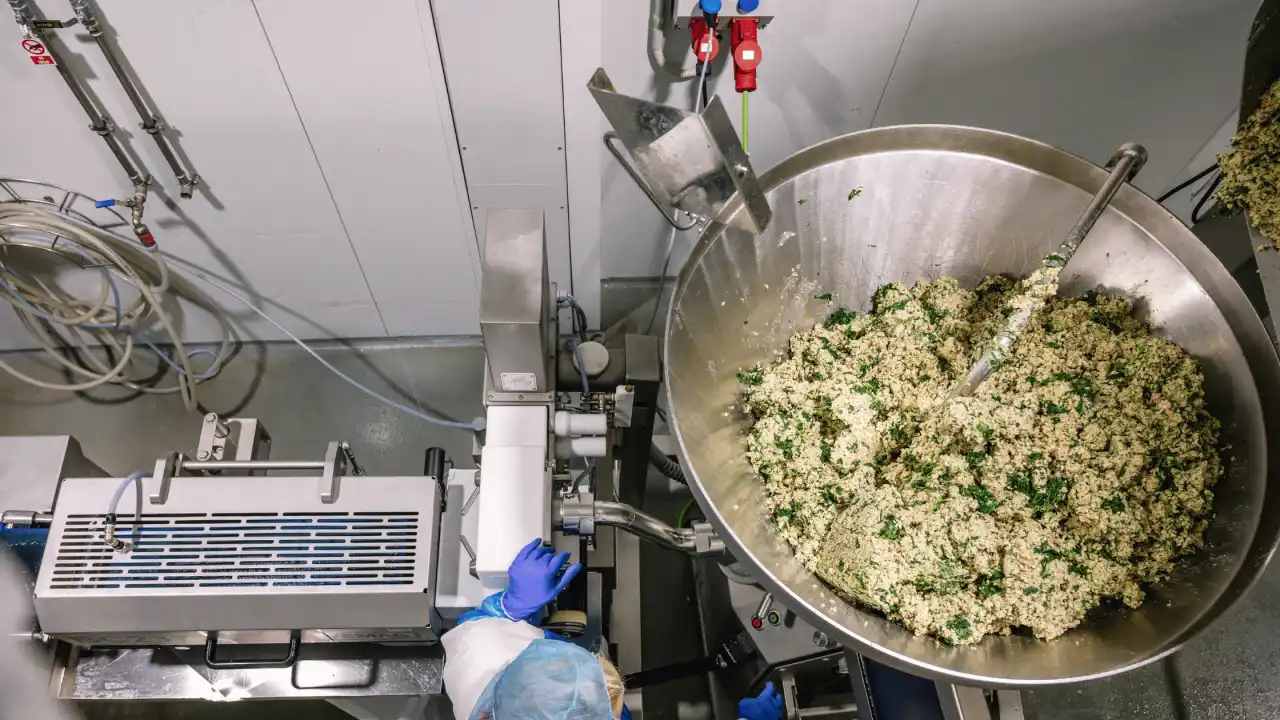
- Prior to production, it is essential to test the recipe at the plant, adjust texture and yield, and establish key parameters (temperature, humidity, viscosity).
- Evaluate compatibility with machinery and technologies such as extrusion or IQF.
- The scale-up process must optimize costs, ensure regulatory compliance, guarantee shelf life, and meet retail/foodservice standards with the support of a specialized partner.
Scaling a plant-based product from a laboratory concept or initial idea to full industrial production can be more complex than it appears. In this article, you’ll learn what to consider when scaling a plant-based product, from formulation validation and adaptation to industrial processes, to cost management, quality control, and meeting retail and foodservice requirements. All with a focus on how an industrial partner can help bring your product to market efficiently and consistently.
Validation of the Formulation Before Industrial Scaling
A recipe that works in the laboratory does not automatically translate to large-scale production. Industrial validation is crucial to ensure flavour, texture, yield, and cost remain consistent when increasing production volumes.
Pilot Trials and Formulation Adjustments
At Sanygran, we conduct industrial-scale trials tailored to the stage of the project:
- Concept stage: We help shape ideas and develop the initial recipe.
- Small-scale validated recipes: We scale and adjust to maintain texture, flavour, and consistency.
- Laboratory-validated recipes: We perform industrial-scale trials to ensure reproducibility before continuous production.
These trials help identify deviations in texture, juiciness, flavour, and performance—particularly in products like vegetable burgers or high-water content doughs—and recipes are adjusted in-house until the desired result is achieved.
Identifying Critical Process Variables
To guarantee consistency across batches, it is essential to define and control critical variables such as temperature, timing, humidity, viscosity, water retention, and ingredient behaviour during cooking or regeneration. These parameters are fundamental for reproducible industrial results.
Adapting Production Scale and Equipment
Scaling affects not only the recipe but also the production line. Assessing whether a product can be manufactured on existing equipment or requires adaptations is key to maintaining efficiency and cost control.
Compatibility with Current Production Lines
Before scaling, it is necessary to determine whether the product integrates seamlessly into existing lines or if adjustments are needed in mixing, cooking, forming, or packaging. This allows investment or equipment modifications only when truly necessary.
Key Technologies to Achieve Texture and Functionality
Sanygran’s full industrial capabilities allow any plant-based development to scale:
- Wet and dry extrusion
- Production of vegetable burgers, hummus, and organic tofu
- Mixing, forming, kneading, and breading
- Fryers, IQF tunnels
These technologies ensure texture, functionality, and stability without the need for small-scale prototypes, enabling even undeveloped ideas to become industrially ready products.
Cost Control and Economic Feasibility of Scaling
Scaling directly impacts unit costs and ingredient yields. Understanding how a recipe performs at industrial scale allows optimisation of costs and minimisation of waste without compromising quality.
Formulation and Process Optimisation to Reduce Costs
During scaling, Sanygran adjusts recipes and processes to:
- Maximise product yield and ingredient utilisation
- Reduce losses in texture or water during cooking
- Maintain consistency batch-to-batch and operational efficiency
This ensures accurate unit cost calculation and product economic feasibility.
Regulatory Compliance and Food Safety
Scaling a plant-based product requires compliance with regulations on labelling, allergens, hygiene, and specific market requirements. Ensuring compliance from the first batch is essential to avoid penalties or delays in market launch.
Verification of Product Quality and Consistency
Maintaining quality and consistency across production is essential for consumer trust and retail acceptance.
Sensory, Physicochemical, and Shelf-Life Control
Sanygran implements controls on:
- Texture, flavour, and colour
- Stability during cooking, pasteurisation, or freezing
- Shelf-life and behaviour after regeneration or cooking
This ensures each batch meets defined specifications, regardless of production volume.
Alignment with Retail and Foodservice Requirements
Retailers and foodservice operators value:
- Product stability and batch-to-batch consistency
- Regularity of supply
- Ease of integration into their range and preparation lines
Validating the product before industrial scaling ensures these expectations are met and facilitates a successful market launch.
The Role of a Technological Partner in Plant-Based Scaling
Working with an industrial partner allows:
- Transforming ideas or initial recipes into scalable products
- Minimising risks of deviations in texture, flavour, or yield
- Optimising development time and cost
Sanygran supports brands and manufacturers from the initial concept to industrial production, adapting recipes, textures, and formats to specific needs, ensuring products are consistent, cost-effective, and ready for consumers.
Other articles you may be interested in:
- Plant-Based Food Development
- Plant-Based Solutions Provider
- Plant-Based Burger Supplier
- Wholesale Pea Starch Supplier
- Organic Tofu Supplier
- Organic Hummus Supplier
- Plant-Based Chicken Supplier
- Plant-Based Beef Supplier
- Plant-Based Seafood Alternatives Supplier
- Vegan Tuna Supplier
- Plant-Based Meat Analogues Supplier
- Pea Protein Concentrate Supplier
- Plant-Based Chunks Supplier
- Texturised Plant-Based Meat Supplier
- Plant-Based Protein Supplier for Ready Meals